The Process — How Fernando Durao Makes Ceramic Art
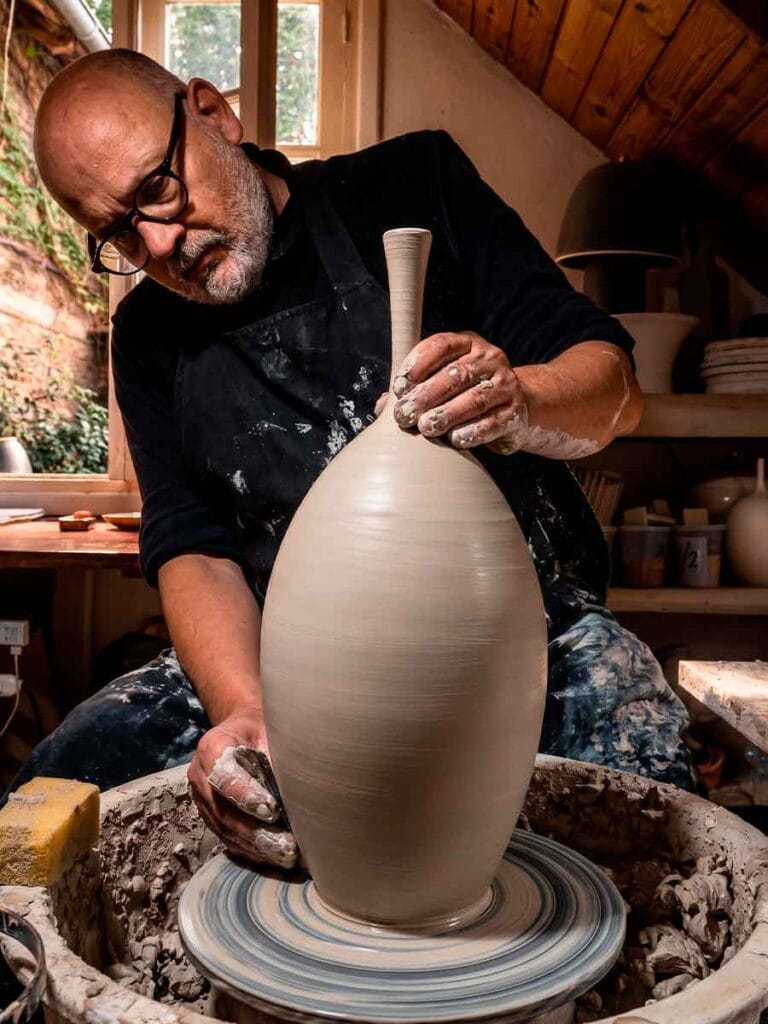
The studio pottery process at Durao Studio begins with raw clay and ends with a signed certificate of authenticity.
That process is what the price reflects. Not a name, not a brand, but a sequence of decisions made by hand over weeks, culminating in an object fired at 1200°C that will outlast almost everything around it.
This page is a guide to that studio pottery process — how it works, what each stage demands, and why it cannot be compressed without changing what the object becomes.
The Material — High-Fire Stoneware
The foundation of every piece is the clay body. Fernando works exclusively with high-fire stoneware — a dense, coarse clay that vitrifies at 1200°C and produces objects with a weight and permanence that lower-temperature ceramics cannot achieve. The choice of material is not aesthetic. It is a decision about what kind of object the finished piece will be.
→ What Is High-Fire Stoneware — And Why It Makes Better Art
The Wheel — Wheel-Thrown Pottery
Every form at Durao Studio begins on the potter’s wheel. Wheel-thrown pottery is inherently unrepeatable — the form is pulled from the clay in real time, by hand, without a mold and without a predetermined outcome. After thirty-five years at the wheel, Fernando’s decisions are automatic. What they produce never is.
→ Wheel-Thrown Pottery: What It Is and Why It Still Matters
The Surface — Mineral Slip Ceramics
Fernando does not use commercial glazes. Every surface finish at Durao Studio is a mineral slip — a formula he has developed over more than thirty years from raw materials: iron oxides, feldspars, silica, natural pigments. Applied by brush, layer by layer, directly onto the raw clay body. The surface that emerges from the kiln is not a coating. It is part of the object.
→ Mineral Slip Ceramics — No Commercial Glazes
The Kiln — Stoneware Firing Temperature
The kiln is the final stage of the studio pottery process — and the only one Fernando cannot fully control. At 1200°C, the clay vitrifies, the slip fuses permanently with the body beneath it, and the object becomes what it will be for the rest of its existence. The fire is the final editor. Fernando has learned to accept its decisions.
→ Stoneware Firing Temperature — What Happens at 1200°C
The Full Studio Pottery Process — Step by Step
From the first wedging of the clay to the signed certificate of authenticity, every piece at Durao Studio passes through six defined stages. No stage can be skipped. No stage can be rushed without consequences that show up later — in the firing, in the surface, in the finished object.
→ From Clay to Object: How a Ceramic Vase Is Made at Durao Studio
The Result — One of a Kind, Every Time
The studio pottery process at Durao Studio produces objects that cannot be reproduced. Not because of a policy — because of physics. The wheel, the hands, the mineral slip, the kiln: each introduces variables that accumulate into a form that existed once, fired once, and will not exist again. Every piece that leaves the studio carries a signed certificate of authenticity confirming exactly that.
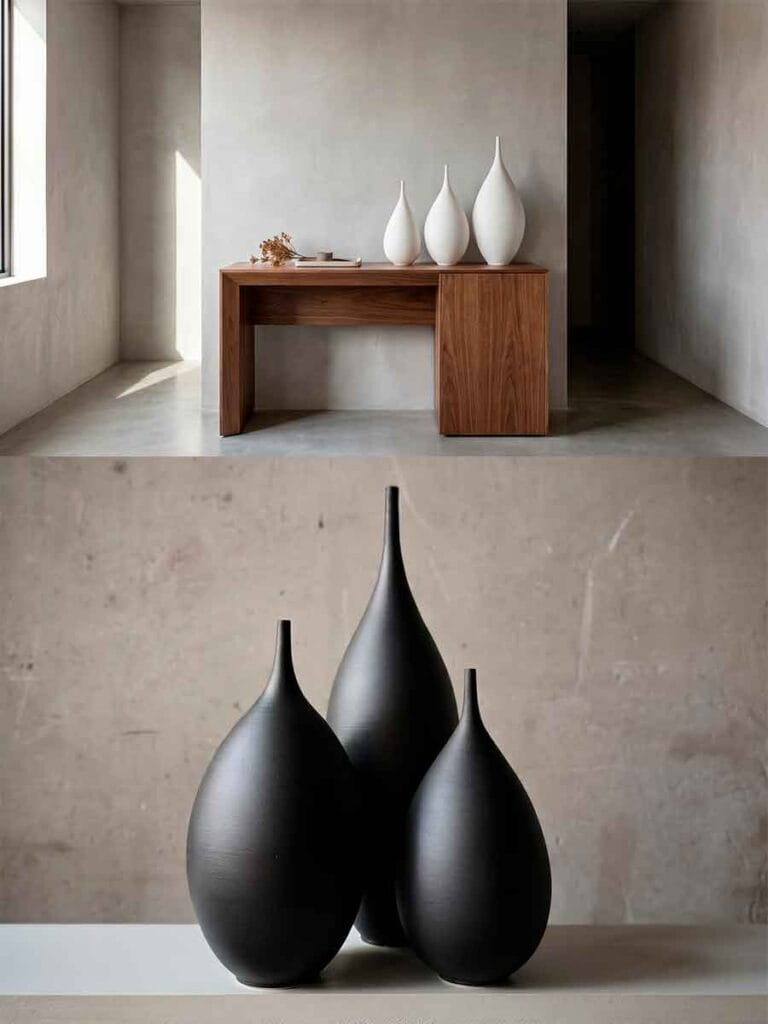
Explore the Collections. The Studio Pottery Process — One of a Kind, Every Time
Each collection at Durao Studio is the direct result of this process — the same clay, the same wheel, the same kiln, but different mineral slip formulas that produce entirely different surfaces and characters.
Unikas Black — Handmade Black Stoneware Vases
Unikas Quartz — White Mineral-Texture Vessels
Moradores — Abstract Ceramic Sculptures
For questions about the work, the process, or to inquire about a specific piece — contact Fernando directly. All messages are answered personally.
For further reading on studio pottery as a practice, see the Studio pottery entry on Wikipedia.