Wheel-Thrown Pottery: What It Is and Why It Still Matters
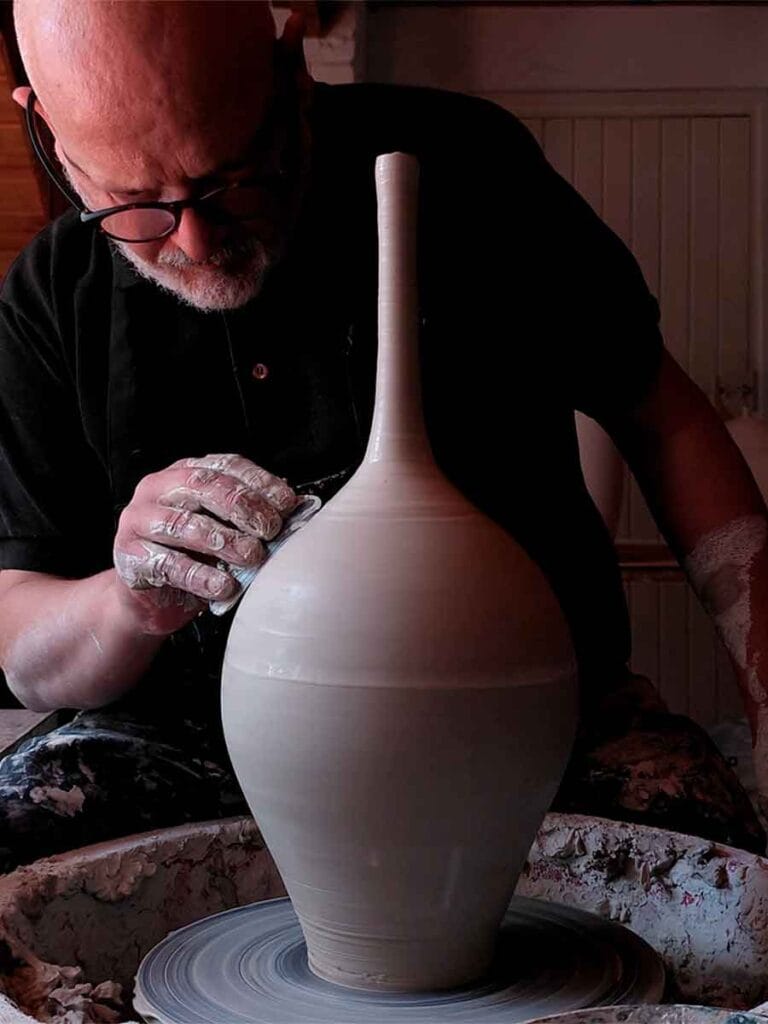
Wheel-thrown pottery is one of the oldest craft techniques still practiced exactly as it was invented. The wheel spins. The hands shape. The clay responds. What emerges is determined in real time — by pressure, by speed, by decisions made in seconds that can’t be undone.
Fernando Durao has been practicing wheel-thrown pottery for over 35 years. This is what it actually means, why it produces objects that no other technique can replicate, and why that distinction matters when you’re choosing a ceramic art object for your home.
What Wheel-Thrown Actually Means
Wheel-thrown pottery — also called “thrown pottery” or “wheel work” — refers to any ceramic piece formed by hand on a rotating wheel. The process begins with a ball of clay centered on the wheel head. As the wheel spins, the potter opens the clay with their thumbs, raises the walls with their fingers and palms, and shapes the form from the inside out.
Every gesture is amplified by the rotation. A millimeter of pressure in the wrong direction at the wrong moment collapses the wall or distorts the form. Centering alone — the act of getting the clay to spin without wobble before anything else can happen — takes years to master. Most beginners spend months on centering before they can throw anything worth keeping.
What makes wheel-thrown pottery distinct is that the form is created in a single, continuous act. The potter and the clay negotiate in real time. The result carries the evidence of that negotiation — in the curve of the wall, in the weight of the base, in the relationship between the body and the neck of a vase.
Wheel-Thrown vs Hand-Built vs Slip-Cast: The Real Differences
There are three primary methods for shaping ceramic objects, and they produce fundamentally different results.
Hand-building encompasses techniques like coiling, pinching, and slab construction — forming clay without a wheel, entirely by hand. Hand-built pieces can achieve forms that the wheel cannot, particularly asymmetrical or sculptural shapes. They tend to show the marks of their making more directly.
Slip-casting is an industrial process: liquid clay (slip) is poured into a plaster mold, allowed to firm, and then released. The result is perfectly uniform — every piece identical to the mold. Slip-casting is how most commercial ceramics are produced, including many sold as “artisan” or “handmade.” The mold makes the form. The human hand finishes it.
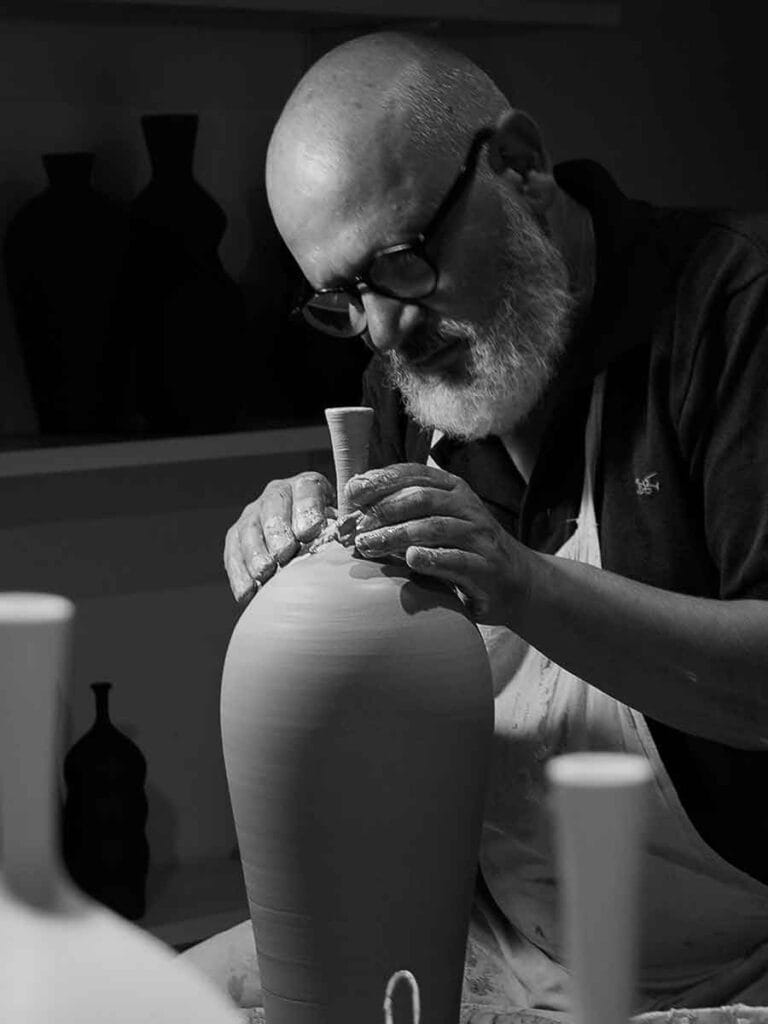
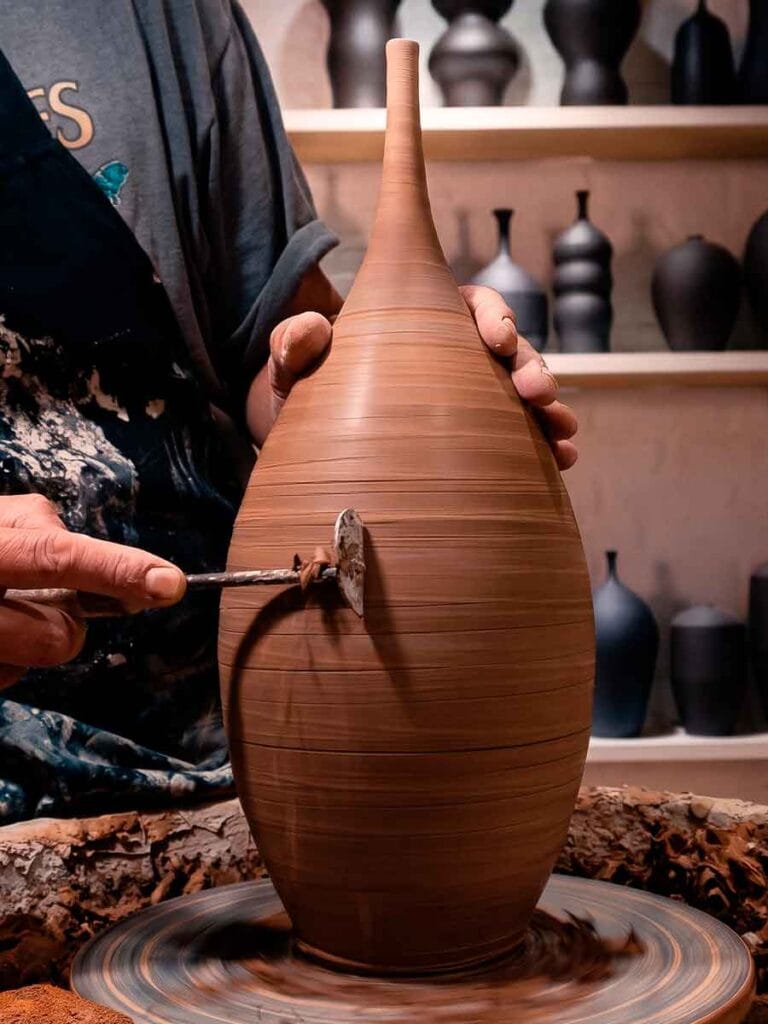
Wheel-throwing produces objects that are inherently round and symmetrical on the vertical axis — but no two are identical. The clay is not poured into a shape. It is pulled into one. The wall thickness varies in ways that molds cannot replicate. The throwing rings — the subtle concentric lines left by the potter’s fingers — record the motion of making. The base retains the marks of trimming. These are not imperfections. They are the proof of process.
When you hold a wheel-thrown piece, you are holding a record of a series of decisions made by a specific person on a specific day. That cannot be reproduced by a mold.
Why Wheel-Thrown Pottery Is Inherently Unique
The word “unique” is overused in craft. Most things described as unique are simply low-edition. Wheel-thrown pottery is unique in a more literal sense: the form is determined by variables that cannot be fully controlled or repeated.
The clay body varies in moisture content from batch to batch. The wheel speed changes imperceptibly. The potter’s hands are not machines — their pressure, their fatigue, their focus on a given day all enter the piece. A form thrown on Monday and the same form attempted on Friday will be different objects, even if the potter is trying to make them identical.
This is not a limitation. It is what makes wheel-thrown pottery worth buying. The piece you receive from a studio potter was made once. Its dimensions, its weight, its surface — these are the result of an unrepeatable set of conditions. No factory can produce that, and no mold can approximate it.
35 Years at the Wheel — What That Looks Like in Practice
Fernando began throwing pottery in the late 1980s. At that point, wheel-thrown pottery was already ancient — the technique dates back over 6,000 years — and there was nothing new to invent about the wheel itself. What takes decades is not learning to use it. It is learning to use it without thinking about it.
After 35 years, the decisions Fernando makes at the wheel are not conscious decisions. They are the accumulated result of thousands of hours of throwing, trimming, and discarding — of understanding what clay does under specific conditions and knowing how to guide it toward something worth keeping. That knowledge does not live in manuals. It lives in the hands.
The pieces Fernando produces today — the Unikas Black, the Unikas Quartz, the Moradores — are the direct result of that accumulated practice. The forms are not designed on paper and transferred to clay. They emerge from the wheel and are selected for what they are. The wheel is where the decisions are made.
What Wheel-Thrown Pottery Means When You Buy
If you are choosing between a ceramic object that was wheel-thrown by an individual potter and one that was slip-cast in a factory — even a well-designed factory — you are choosing between two fundamentally different categories of object.
The slip-cast piece was designed once and produced many times. Its form is the result of a design process. The wheel-thrown piece was made once. Its form is the result of a making process. The difference is not only aesthetic. It is ontological — the two objects exist in different ways.
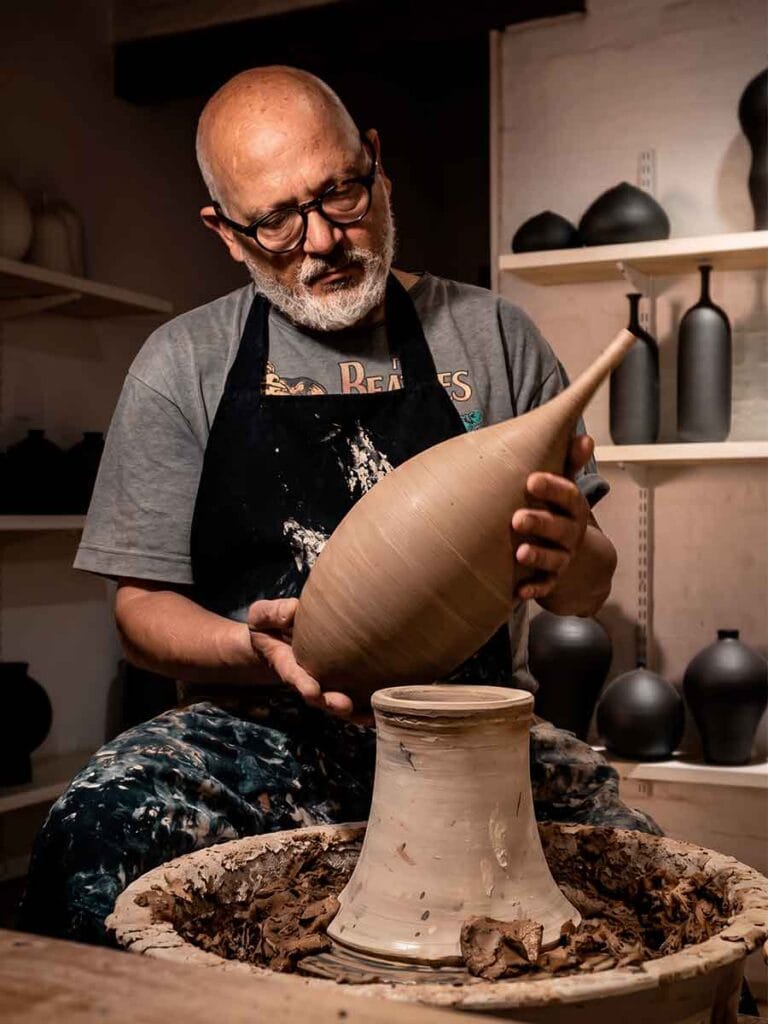
Wheel-thrown pottery from a studio like Fernando’s is not more expensive because of the name on the certificate. It is more expensive because the conditions of its making cannot be replicated at scale. What you pay for is not a brand. It is a process — and the specific, unrepeatable object that process produced.
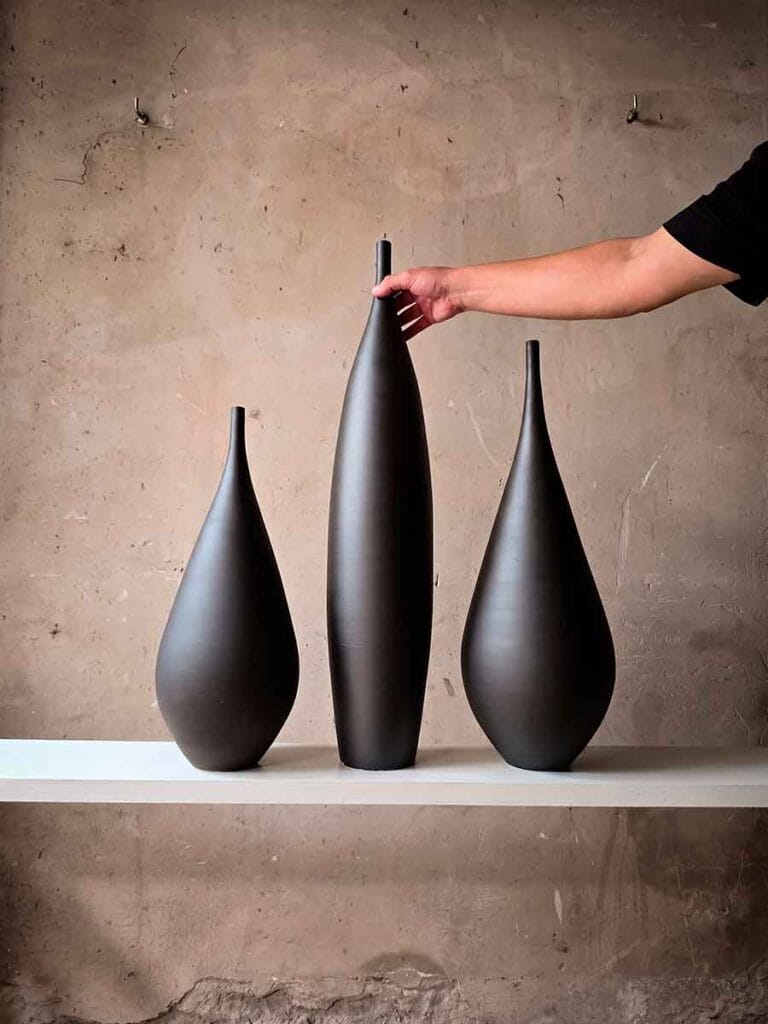
Every piece at Durao Studio is wheel-thrown by Fernando in his Buenos Aires studio and fired at 1200°C in high-fire stoneware. Browse the Unikas Black and Unikas Quartz collections, or read about Fernando’s 35 years at the wheel.
For questions about the work or to inquire about a specific piece, contact Fernando directly.
For historical context on the potter’s wheel, see the Potter’s wheel entry on Wikipedia.