What Are Mineral Slips — And Why Fernando Doesn’t Use Commercial Glazes
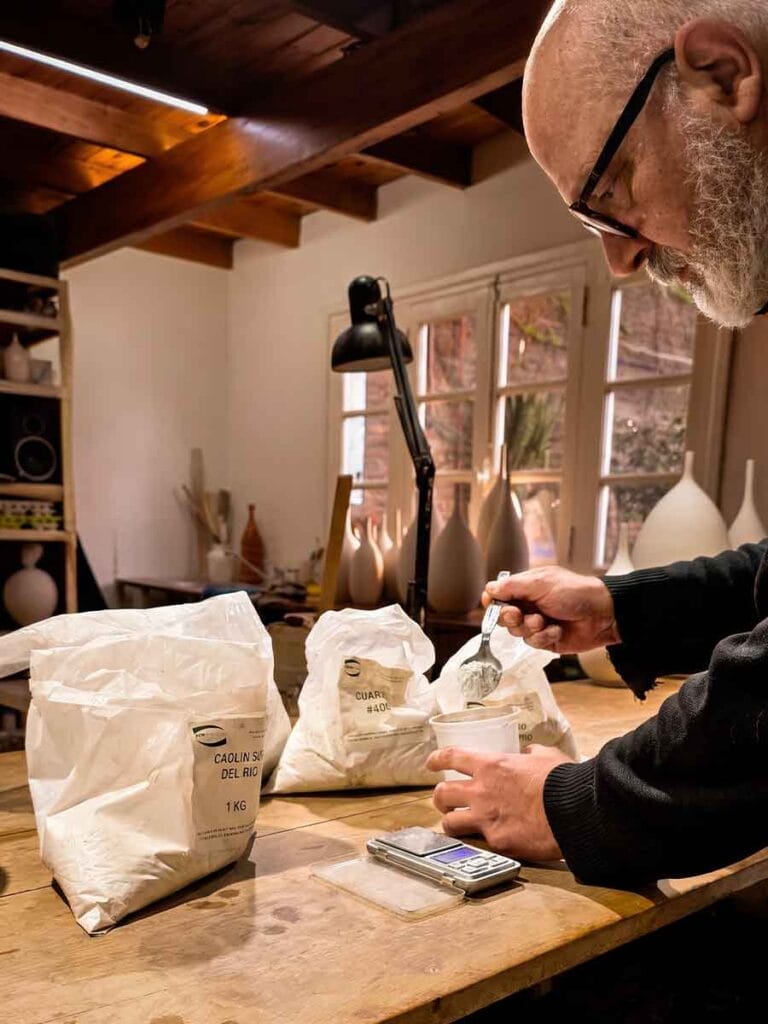
mineral slip ceramics have a surface unlike anything a commercial glaze can produce. I have never used a commercial glaze.
Not because they don’t work — they do. Commercial glazes are reliable, consistent, and available in hundreds of colors and finishes. They are used by most ceramic studios in the world, including many excellent ones. There is nothing wrong with them.
But they were made by someone else, for everyone. And what I make is for no one in particular — which means the surface has to come from the same place the form does. From this studio, from these hands, from decisions that belong to this work and no other.
That is what a mineral slip is. And this is how it works.
What a Mineral Slip Is — And What It Isn’t
A slip, in ceramics, is a liquid mixture of clay and water — sometimes with added minerals, oxides, or other materials — applied to a piece before firing. It is one of the oldest surface treatments in the history of pottery. Ancient Greek ceramics were finished with slips. So were Roman terra sigillata pieces. The technique predates glazes by thousands of years.
A glaze is different. Glazes are glass-forming materials — silica-based compounds that melt in the kiln and form a glassy, sealed layer on the surface of the clay. They are applied the same way, before firing, but what they produce is fundamentally different: a surface that is smooth, reflective to varying degrees, and chemically sealed.
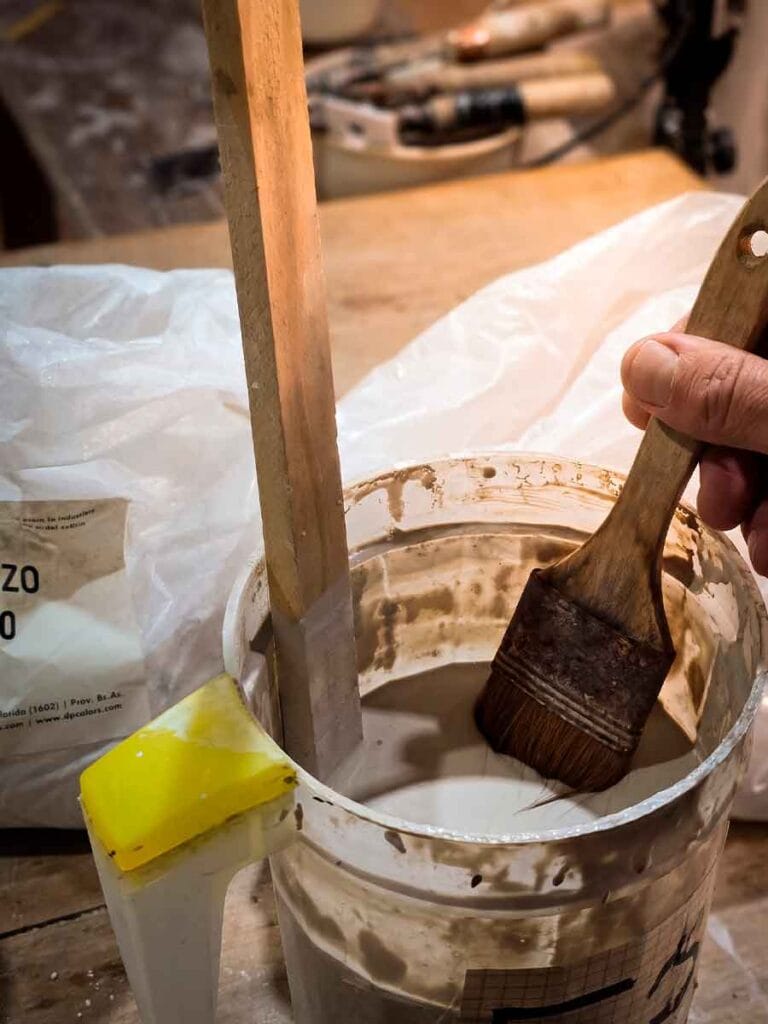
A mineral slip does not melt into glass. It fuses with the clay body beneath it — permanently, at high temperature — but retains its material character. It reads as earth, not as glass. It is matte where glazes tend toward shine. It is tactile where glazes tend toward smooth. Under your fingers, a mineral slip surface feels like what it is: compressed stone.
Why Commercial Glazes Are a Shortcut — And What They Sacrifice
Commercial glazes are formulated for consistency. They are tested across thousands of firings to produce the same result every time — the same color, the same texture, the same surface. That consistency is their value. It is also their limitation.
When every studio uses the same commercial glaze, every studio produces the same surface. The color on the label is the color on the piece. The finish the manufacturer chose is the finish the potter applies. There is skill involved in the application, and there is craft involved in the firing — but the material itself carries no decision from the studio that used it.
I am not interested in that. I am interested in a surface that could only have come from this place, this clay, this formula. A surface that took years to develop and would take years more to reproduce. That is what a mineral slip gives me. Commercial glazes cannot give me that, no matter how good they are.
Fernando’s Formulas — What Goes Into the Slip
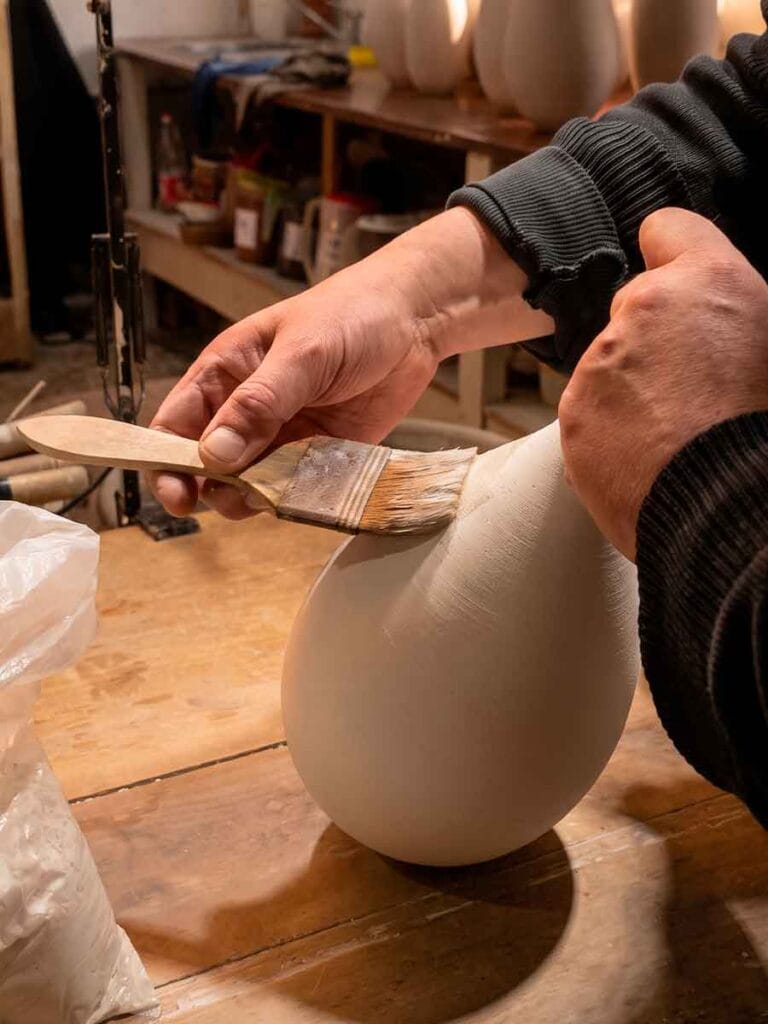
The mineral slip ceramics I produce at Durao Studio are formulas I’ve developed over more than thirty years… They’re no secret: the ingredients aren’t unusual. What is unique to me is the proportion, the sequence, and the understanding of how these materials behave at 1200 °C with this clay body, in this kiln.
The base of every slip is clay — usually a combination of clays with different particle sizes and shrinkage rates. To that I add minerals that modify the surface: iron oxides for color and depth, feldspars for the way they flux at high temperature, silica for hardness and stability. Sometimes manganese, sometimes cobalt, sometimes natural pigments that have been part of ceramic tradition for centuries.
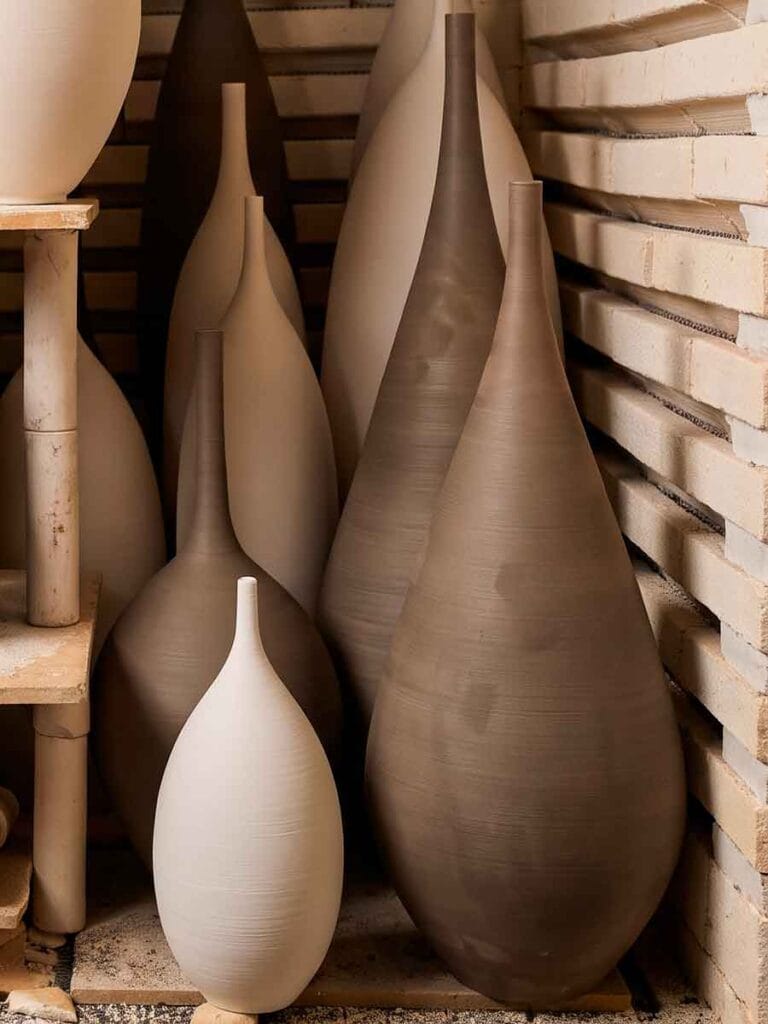
The Unikas Black slip is built around iron oxide — the mineral that gives clay its dark tones, from warm brown to deep matte black depending on firing temperature and atmosphere. The Unikas Quartz slip is built around feldspars and silica — materials that produce a surface that reads like compressed stone, dense and mineral, with a whiteness that is not the whiteness of porcelain but something older and less refined.
Each formula was arrived at slowly. There is no shortcut in that process either.
What Happens to a Mineral Slip in the Kiln
When a slipped piece enters the kiln and the temperature begins to rise, the slip and the clay body beneath it start to move together. At around 600°C, the chemically bound water in the clay burns off. At 900°C, the clay begins to sinter — the particles start to bond. At 1200°C, the feldspar in the slip begins to flux, filling the microscopic spaces between particles and fusing the slip permanently to the body beneath it.
What comes out of the kiln is not clay with a coating on top. It is a single material — clay and slip fused into one object, as permanently as anything made by human hands can be. The surface you touch on a finished Unikas piece is not applied to the stoneware. It is part of it.
That permanence is what thirty-five years of working with these materials has taught me to aim for. Not decoration. Not finish. Something closer to identity.
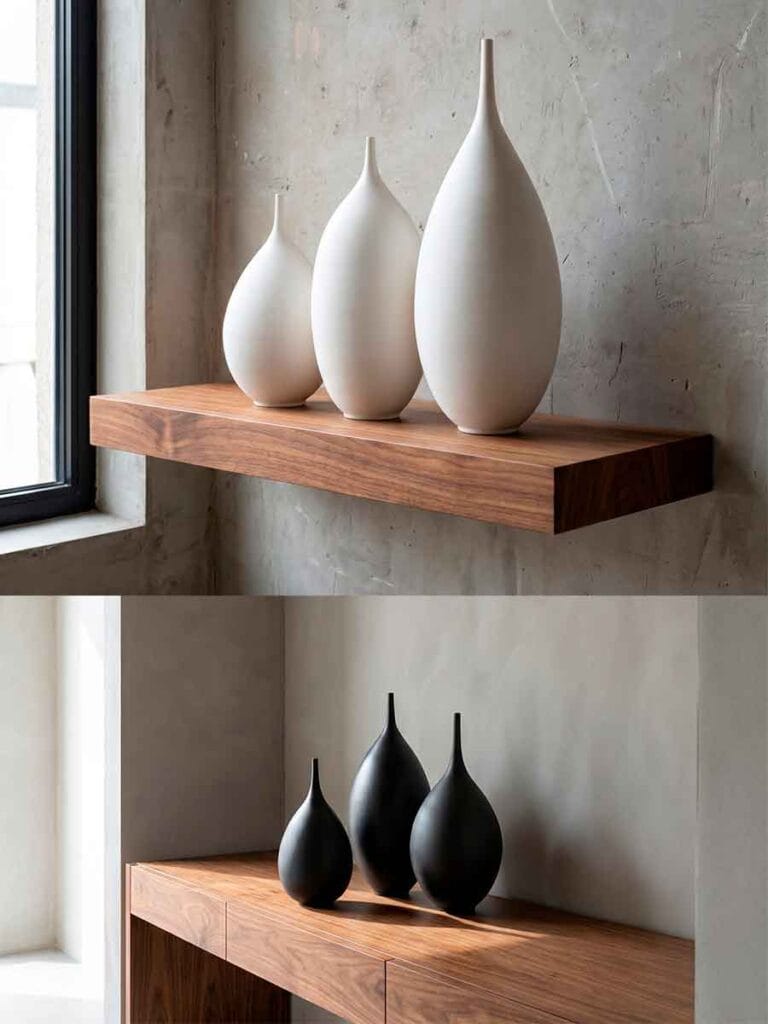
The mineral slips ceramics in the Unikas Black and Unikas Quartz collections are the result of thirty-five years of studio practice — formulated, tested, and refined in Buenos Aires, one firing at a time. You can read more about the material beneath the slip in What Is High-Fire Stoneware, or about the process that shapes each piece in Wheel-Thrown Pottery: What It Is and Why It Still Matters.
To inquire about a specific piece, contact Fernando directly.
For a technical overview of ceramic slips and their history, see the Slip entry on Wikipedia.