Black Ceramic Vases for Modern Interiors — The 2026 Case
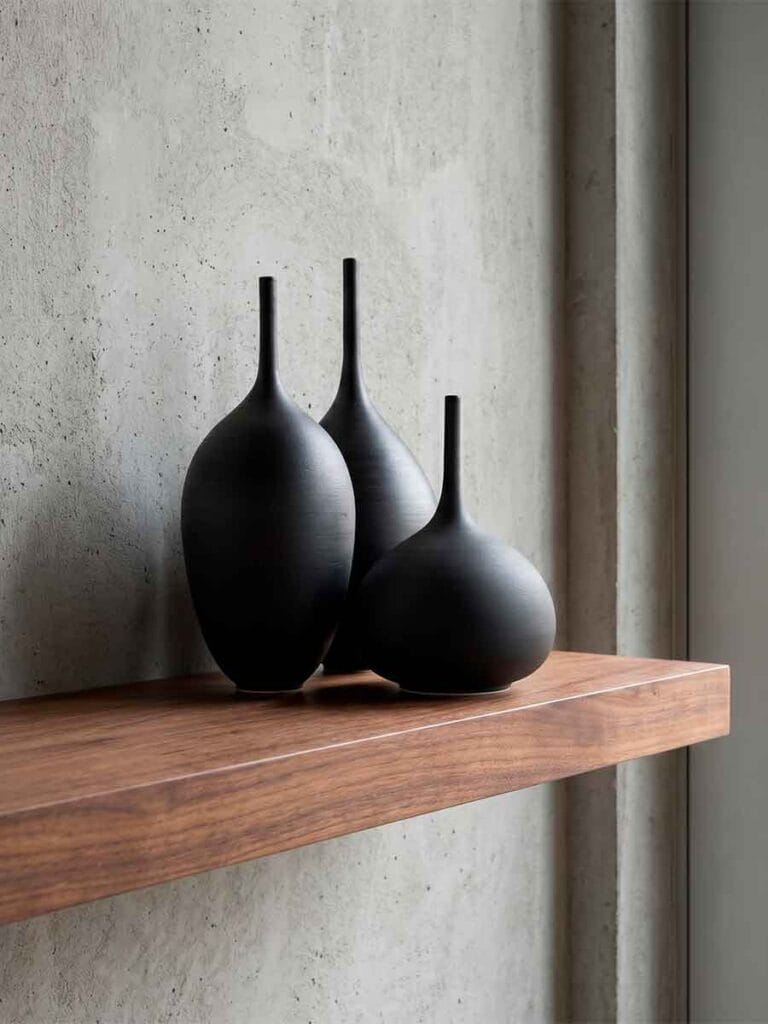
Black ceramic vases have become the defining sculptural anchor of modern interiors in 2026. Not as a trend — as a response to a problem that softer, more neutral ceramics cannot solve: the problem of presence. In a room with warm woods, raw concrete, and natural linen, a matte or satin black stoneware vase does something that no other decorative object does as efficiently. It stops the eye. It anchors the composition. It makes the room feel finished.
This is why black ceramic vases for modern interiors are being specified by designers across residential and hospitality projects in the United States — and why the material and process behind the black surface matter as much as the color itself.
Why Black Ceramic Vases Work in Modern Interiors
The logic of black in interior design is simple: black absorbs light rather than reflecting it. In a room where every other surface is warm, textured, or organic, a black ceramic object creates contrast without color. It doesn’t compete with the materials around it — it completes them.
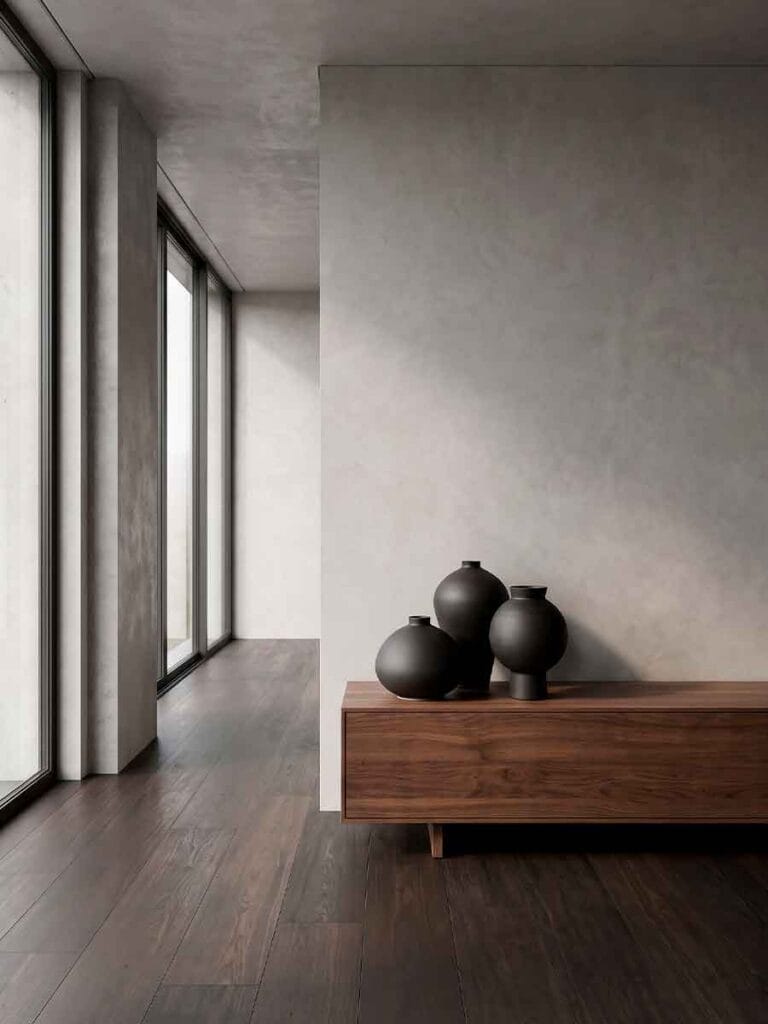
In 2026, premium buyers and interior designers in the US are increasingly using monochrome ceramic pieces as sculptural anchors — objects with high perceived presence and controlled visual weight. A black stoneware vase on a walnut console reads differently from a white or terracotta piece in the same position. It reads as a decision. It reads as confidence.
What makes black ceramic vases particularly effective in modern interiors is that they work with almost any material palette — warm wood, marble, concrete, linen, brass — without requiring coordination. They don’t match. They contrast. And contrast, in interior design, is what creates visual interest.
Matte vs Satin — The Surface of Black Ceramic Vases for Modern Interiors
Not all black ceramic vases have the same surface — and the surface is what determines how the piece reads in a modern interior.
A commercial matte black glaze produces a flat, uniform surface. It reads the same in every light, at every angle, in every interior. Its consistency is its limitation: it is the same object everywhere it appears.
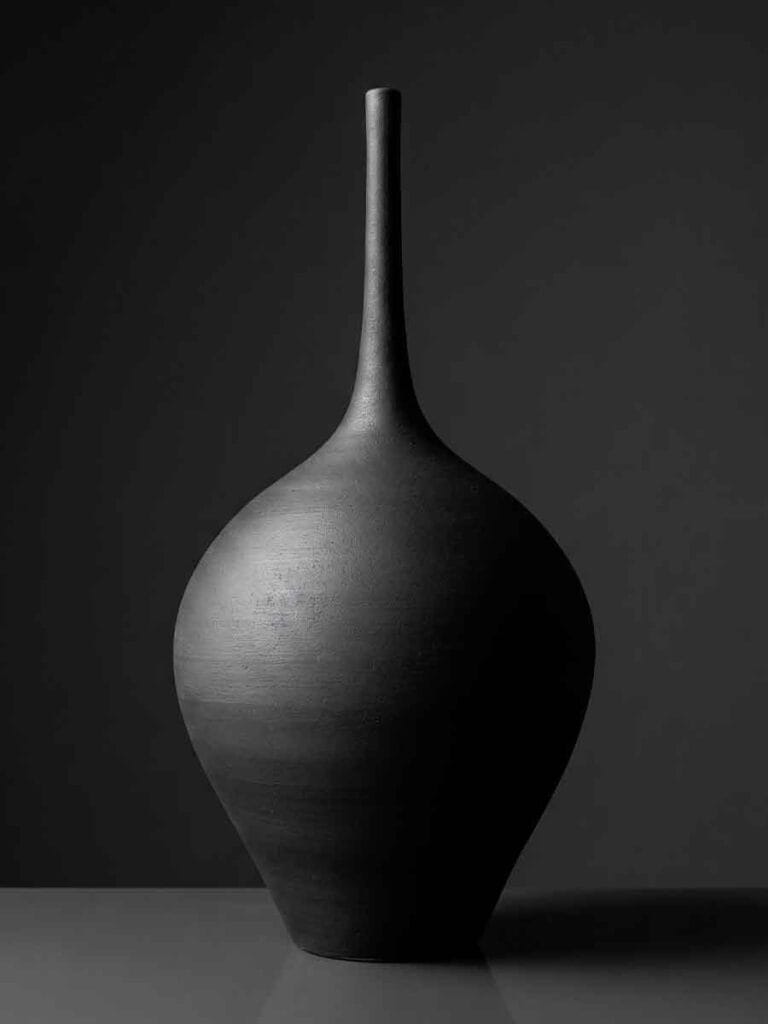
A mineral slip surface — like the one used in the Unikas Black collection at Durao Studio — behaves differently. The slip is built from iron oxides, feldspars, and silica, applied by brush in layers directly onto the raw stoneware body and fired at 1200°C. The result is a surface that ranges from deep matte to quiet satin, depending on the number of layers applied and the temperature reached in that specific firing.
In morning light, a Unikas Black piece reads as flat and dense. In afternoon sun, the mineral texture becomes visible — small shadows in the recesses of the brushwork, a directional quality that changes with the angle. In lamplight, the satin areas of the surface pick up a warmth the matte areas absorb. The piece is not the same object at different times of day. That responsiveness to light is what makes it worth placing carefully — and worth having in a modern interior that changes through the day.
How to Use Black Ceramic Vases in Modern Interiors — Placement Guide
The placement of black ceramic vases in modern interiors follows the same principles as any sculptural object — negative space, scale, and material contrast — but with one additional consideration: background.
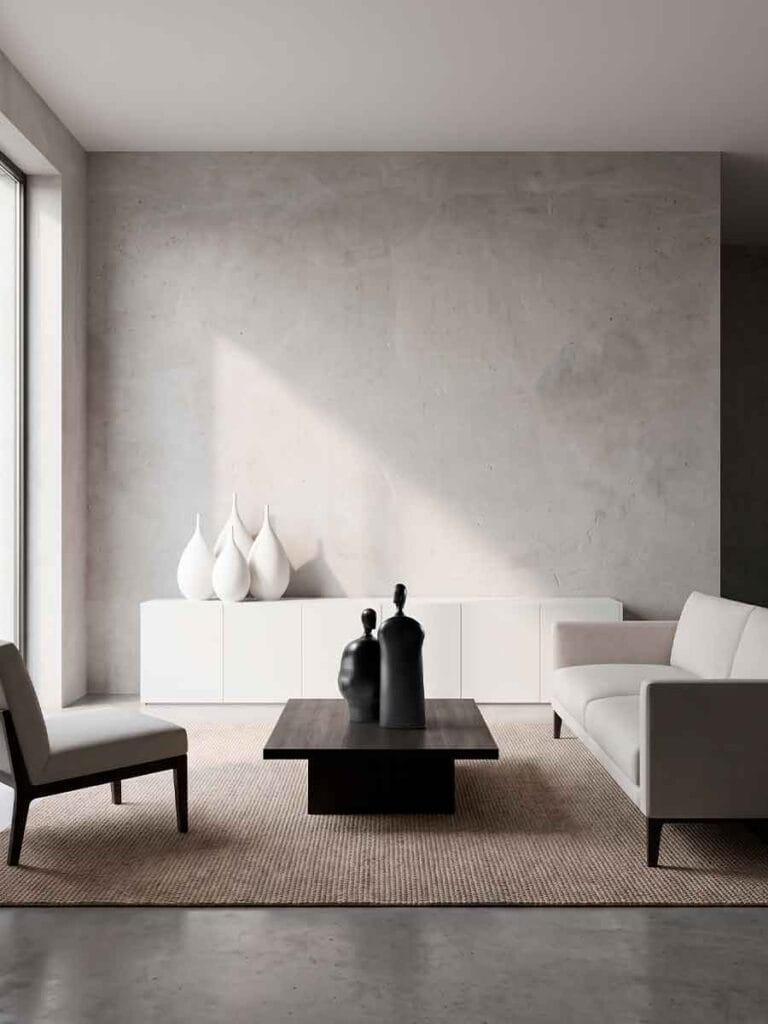
A black ceramic vase reads most powerfully against a light background — white, raw plaster, pale concrete. Against a dark wall, the piece loses its definition and blends into the surface. Against a light wall, the silhouette reads clearly and the mineral surface becomes fully visible.
On a floating shelf: One or three pieces in graduated heights, against a light wall. The contrast between the black mineral surface and the pale background creates a composition that needs nothing else.
On a walnut or warm wood console: Black stoneware on warm wood is one of the most effective combinations in contemporary interior design. The contrast between the mineral surface and the organic grain is immediate and self-sufficient. One piece or three — nothing else needs to be added.
On a marble surface: The contrast between black stoneware and white marble creates a graphic, architectural composition. This works particularly well in entry halls, bathrooms with marble countertops, and formal living rooms.
On the floor: Large format black ceramic vases in a corner, against raw plaster or concrete, transform dead space into an architectural element. This is where the scale and weight of high-fire stoneware become most visible — the piece holds the space on its own.
Alongside the Moradores: The Moradores sculptures at Durao Studio are made from the same black stoneware body and finished with the same mineral slip as the Unikas Black collection. Placing a Morador sculpture alongside a set of Unikas Black vases creates a coherent composition — same material, different form, same presence.
Black Ceramic Vases for Modern Interiors — What to Look For
When buying black ceramic vases for a modern interior, the surface is the most important thing to evaluate — more than the form, more than the price.
A genuine mineral slip surface on high-fire stoneware is identifiable by its texture. It is not perfectly smooth. It is not uniformly flat. Under your fingers, it feels like compressed stone — coarse, dense, slightly directional from the brushwork. That texture is what allows the surface to respond to light the way it does. A commercial black glaze is smooth and sealed — it reflects light uniformly and doesn’t change.
The second thing to look for is weight. High-fire stoneware fired at 1200°C has a density that lower-temperature ceramics don’t achieve. A Unikas Black piece feels substantial in the hand — not heavy in the sense of awkward, but weighty in the sense of permanent. That weight communicates something about what the object is.
The third thing is singularity. A black ceramic vase in a modern interior that is worth specifying is one that exists once. No edition, no reorder, no mold. The Unikas Black collection at Durao Studio is made exactly this way — each piece thrown once, fired once, selected and sold as a one-of-a-kind object. That singularity is documented in the signed certificate of authenticity that ships with every piece.

Browse the full Unikas Black collection — handmade black stoneware vases shipped to the United States with a signed certificate of authenticity. For the sculptural companion to the Unikas Black pieces, see the Moradores collection.
For more on the surface behind the black finish, read Mineral Slip Ceramics — No Commercial Glazes. For the full guide on decorating with ceramic objects, see How to Style Ceramic Objects on Shelves and Surfaces.
To inquire about a specific piece, contact Fernando directly.
Follow the studio: @durao.studio
For context on the role of color in interior design, see Interior design on Wikipedia.