What Makes a Ceramic Piece Worth Collecting? A Buyer’s Guide
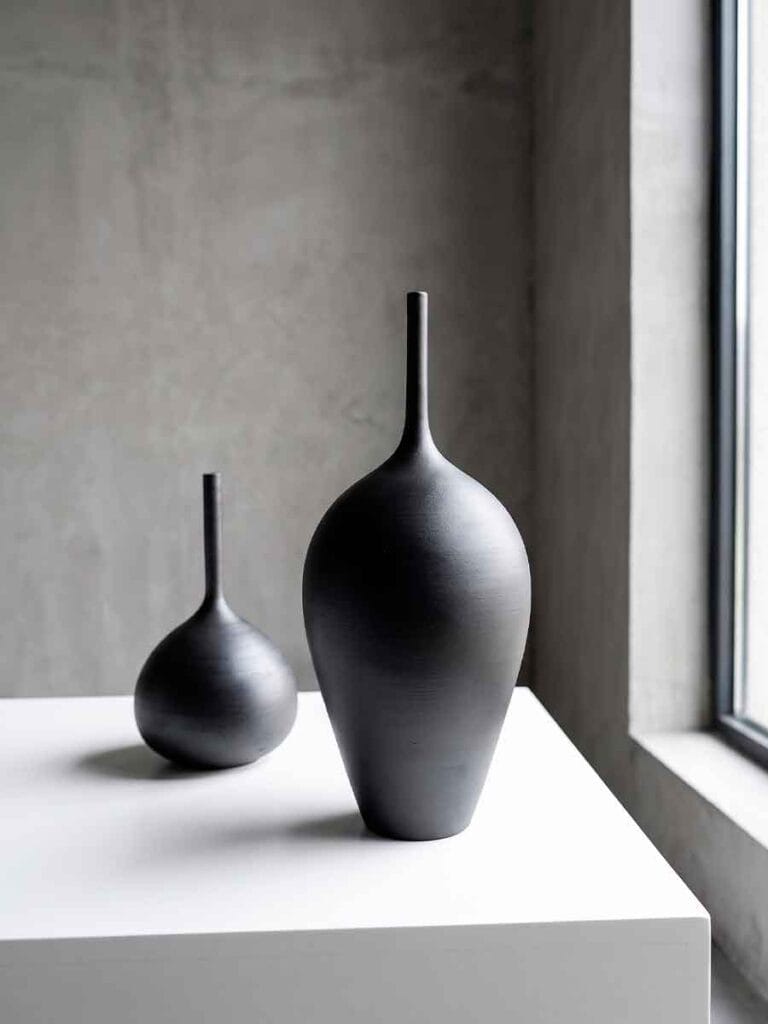
Not every ceramic piece is worth collecting. Most are worth buying — they are well made, they look good in a space, they hold their form over time. But collecting is a different category of relationship with an object. It implies that the piece has qualities that justify keeping it, caring for it, and — if the moment ever comes — passing it on.
This is a guide to identifying those qualities in a ceramic piece. Five questions a buyer should ask before committing to something that claims to be worth more than its function.
Who Made It — The Provenance Question
The first question for any ceramic piece worth collecting is the simplest: who made it, and can that be verified?
A piece made by a named artist, in a named studio, with a documented process has provenance. Provenance is not a guarantee of quality — it is the precondition for being able to evaluate quality honestly. Without knowing who made something, how it was made, and where, the buyer has no basis for judgment beyond the visual. And the visual, in ceramics, can be deceiving.
Fernando Durao has worked at the wheel for over thirty-five years in his studio in Lanús, Buenos Aires. His work has been carried by Fontenla and placed in projects by Hugo Di Marco, whose work has been shown at Casa FOA — Argentina’s most prestigious design showcase. That provenance is traceable. It doesn’t make any single piece valuable by itself — but it means the buyer is not buying a story. They are buying an object made by a specific person with a verifiable history.

How Was It Made — The Process Question
The second question is about process: how was the piece made, and does that process produce objects with the properties that make something worth collecting?
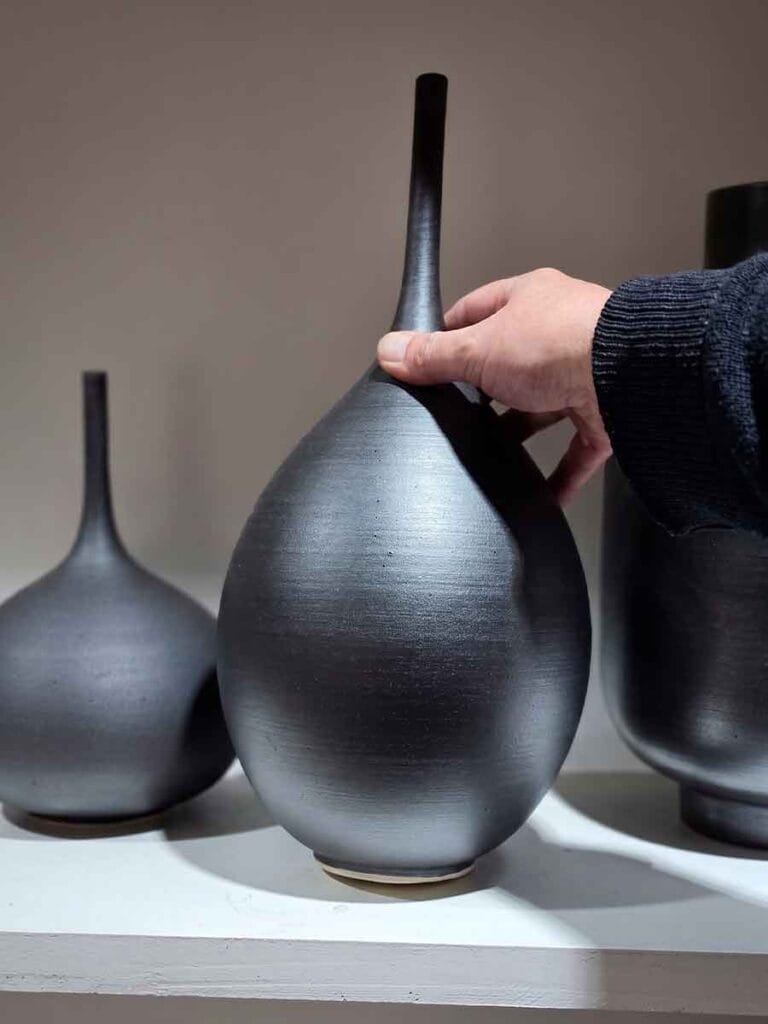
Wheel-thrown high-fire stoneware has specific properties that other ceramic processes don’t share. The form is pulled from the clay by hand, in real time, without a mold — which means it carries the decisions of the maker at every point of its making. The surface, if finished with a mineral slip rather than a commercial glaze, is a formula that belongs to that studio alone. The firing at 1200°C produces a material that is dense, non-porous, and structurally permanent.
These properties matter for collecting because they are the physical evidence of the process. A wheel-thrown piece cannot be reproduced by a machine. A mineral slip formula developed over decades cannot be duplicated by a commercial supplier. A firing at 1200°C cannot be approximated at lower temperatures without changing what the object is.
When these properties are present, the process is legible in the object. The buyer is not taking the maker’s word for it. They can feel it.
Is It Singular — The One of a Kind Question
A ceramic piece worth collecting is one that exists once. Not one that was produced in a limited edition of fifty — one that was made once, on a specific day, under specific conditions, and will not be made again.
The distinction matters because what makes something collectible is not scarcity as a policy. It is unrepeatable as a fact. A limited edition of fifty can be extended. A mold-cast piece can be rerun. A wheel-thrown piece, finished with a mineral slip and fired in a specific kiln at a specific temperature, cannot be reproduced — because the variables that determined its form and surface cannot be recreated exactly.
Every piece at Durao Studio is singular in this sense. Each one is thrown individually, selected from the firing, and documented in a signed certificate of authenticity. When a piece sells, what sold was that specific object. The next piece Fernando throws will be different — related, perhaps, in character and material, but not the same.
Does the Surface Reward Attention — The Quality Question
A ceramic piece worth collecting has a surface that gives back more than it shows at first. On initial contact, it reads as black, or white, or textured. On closer inspection, the directional quality of the brushwork becomes visible. Under different light, the mineral texture shifts. In the hand, the weight and density of the fired stoneware communicates something that photographs cannot.
This is the fourth question for any ceramic piece under consideration: does the surface reward sustained attention? Or does it exhaust itself in the first glance?
A commercial glaze exhausts itself quickly. It is designed for visual impact at a distance — at the point of sale, in a photograph, in the first moment of seeing. A mineral slip surface develops over time. The buyer who lives with a Unikas Black or Unikas Quartz piece for a year will notice things about its surface that they didn’t see in the first month. That is the quality of a surface worth collecting — it doesn’t run out.
Is It Documented — The Authenticity Question
The fifth question is administrative but not trivial: is the piece documented? Does it come with a certificate of authenticity that confirms who made it, what it is, and that it is an original, unrepeatable work?
For a ceramic piece worth collecting, documentation serves two purposes. The first is personal: it confirms what the buyer believes they are buying. The second is practical: it is relevant if the piece is ever shipped across an international border, resold, or included in an estate.
Every piece at Durao Studio ships with a signed certificate of authenticity from Fernando Durao. The certificate includes the collection name, the piece reference, and Fernando’s signature. It confirms that the work is an original, one-of-a-kind handmade ceramic art object — not a reproduction, not part of an edition. That document accompanies the piece for the rest of its existence.
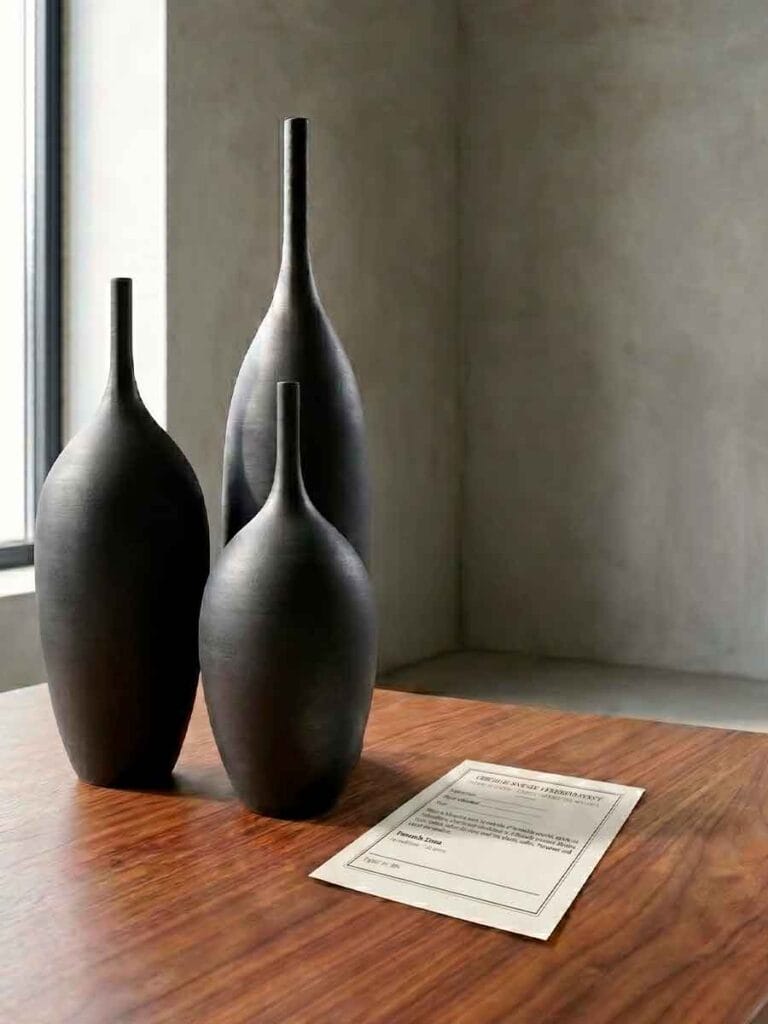
Browse the pieces available at Durao Studio — Unikas Black, Unikas Quartz, and Moradores. Each piece ships to the United States with a signed certificate of authenticity and door-to-door insurance.
For more on what makes each piece truly unrepeatable, read One of a Kind Ceramic Art: What It Really Means. For the process behind every piece, see The Studio Pottery Process.
To inquire about a specific piece, contact Fernando directly.
Follow the studio: @durao.studio
For context on what makes art collectible, see Art collecting on Wikipedia.