What Is Studio Pottery — And Why the Studio Matters
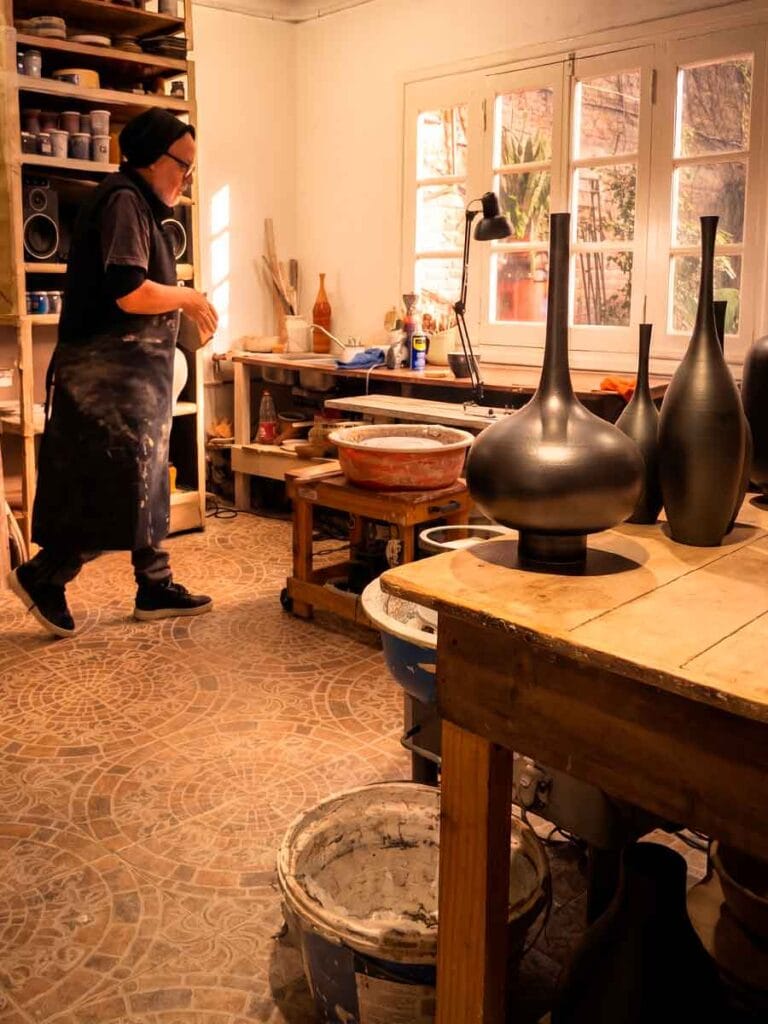
Studio pottery is a term with a specific meaning that the market has diluted almost beyond recognition. It appears on commercially produced ceramics, on mass-manufactured objects with a hand-applied glaze, on pieces that have never been near a studio in any meaningful sense. Understanding what studio pottery actually is — and why the studio is the operative word — is the starting point for understanding what Durao Studio makes and why it matters.
What Is Studio Pottery — A Definition
Studio pottery refers to ceramic work produced by an individual artist working in their own studio — from raw clay to finished object — with full control over every stage of the process. The term emerged in the early twentieth century to distinguish the work of artist-potters from the output of ceramic factories and workshops, where labor was divided and the maker had no control over the whole.
The defining characteristic of studio pottery is authorship. One person — or a very small group — is responsible for the clay body, the form, the surface treatment, and the firing. There is no division of labor that separates design from making, or making from finishing. The studio potter is the designer, the maker, and the finisher. The work carries the decisions of one pair of hands from beginning to end.
In the century since the term was coined, studio pottery has produced some of the most important ceramic art in the world. It has also been appropriated by the market as a descriptor for work that has nothing to do with individual authorship. The word “studio” in a product description means nothing without a specific studio, a specific maker, and a verifiable process behind it.
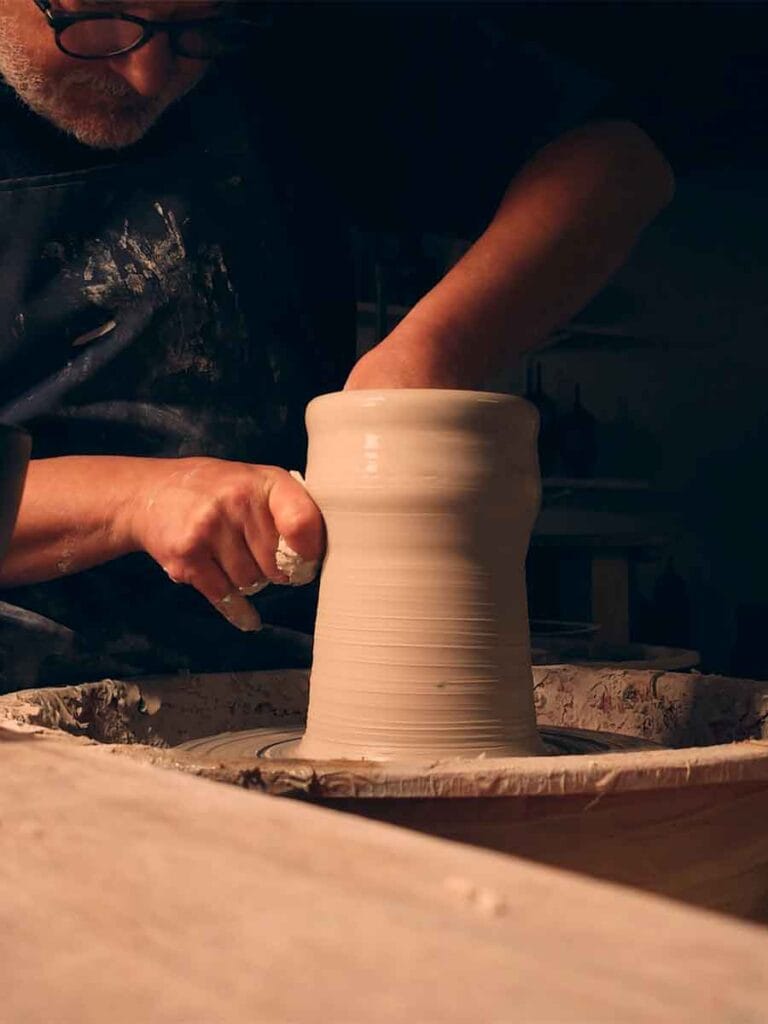
Why the Studio Matters in Studio Pottery
The studio is not a location. It is a set of conditions that make a certain kind of work possible.
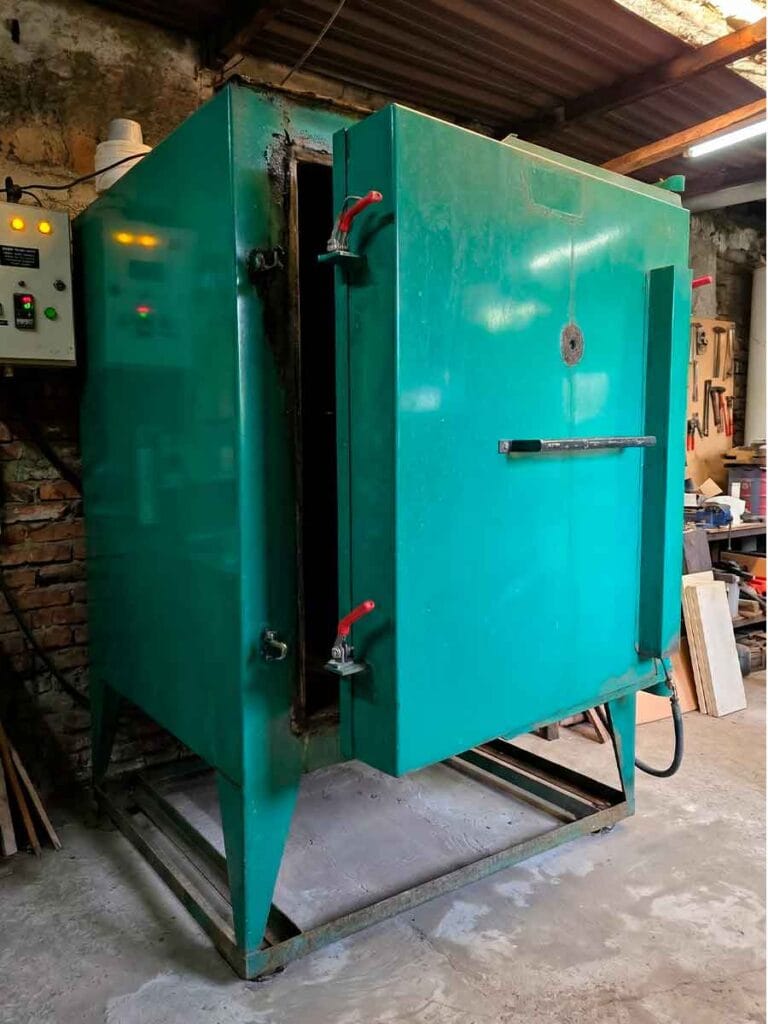
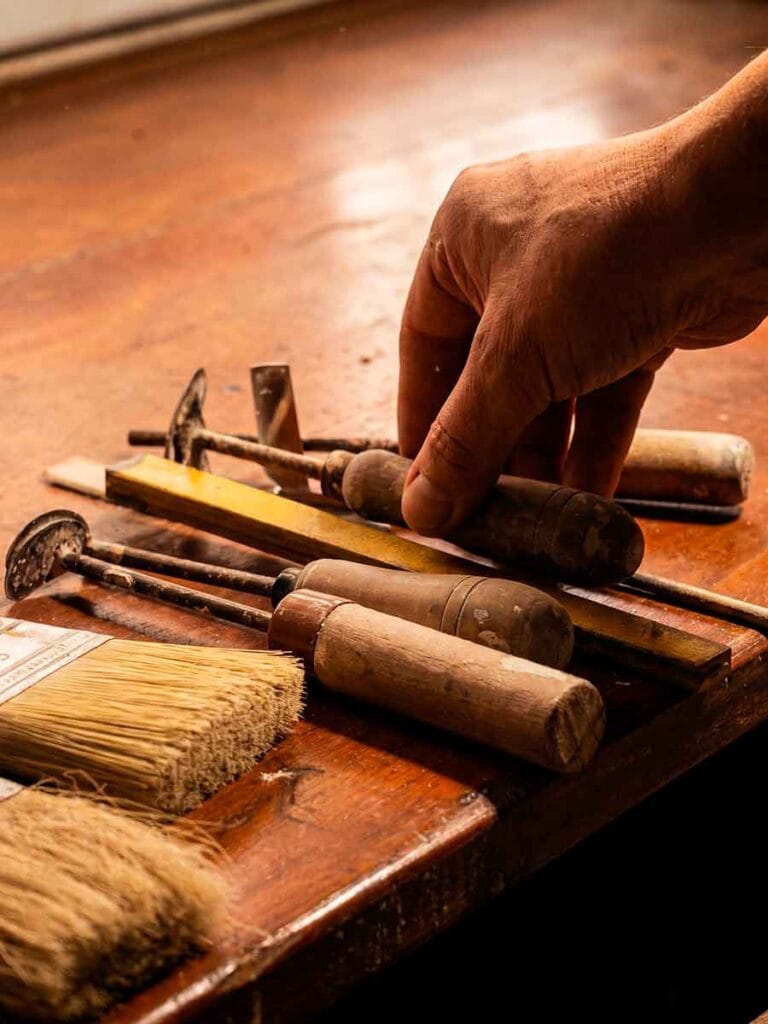
In Fernando Durao’s studio in Lanús, Buenos Aires, those conditions include: a specific wheel that has been calibrated to his throwing style over decades. Shelves of raw materials — clays, oxides, feldspars, silica — that he has selected, tested, and combined into formulas that belong to this studio alone. A one-cubic-meter kiln of refractory brick that he has fired hundreds of times and that he understands the way a musician understands an instrument. And thirty-five years of accumulated knowledge about how clay behaves, how mineral slips flux at high temperature, and what distinguishes a piece worth keeping from one that should go back to the wedging table.
None of these conditions exist in a factory. None of them can be replicated by a worker following a specification. They are the product of a specific person working in a specific space over a long period of time. The studio is where those conditions were built — and where they make the work possible every day.
This is why studio pottery cannot be scaled without ceasing to be studio pottery. The moment the work is divided, the authorship is divided. The moment the authorship is divided, what is made is something else — possibly good, possibly beautiful, but not studio pottery.
Studio Pottery and the Market — What Has Changed
The global market for handmade and artisanal ceramics is growing at a consistent rate — driven, according to industry data, by consumers who are increasingly seeking products with authentic provenance, cultural identity, and individual authorship. The shift is real and documented: buyers in the premium segment are moving away from objects that occupy space without character, toward pieces that carry the evidence of their making.
This shift creates both an opportunity and a risk for studio pottery. The opportunity is obvious: the audience for genuine studio work has never been larger. The risk is that the same demand generates a market full of objects described as “handmade,” “artisanal,” and “studio pottery” that are none of those things — commercially produced objects wearing the vocabulary of individual authorship.
For the buyer, the practical consequence is the need to ask the questions that distinguish real studio pottery from its imitations. Who made it? In what studio? By what process? With what materials? At what temperature? Is there documentation? The answers to those questions — not the appearance of the object, not the price, not the description — are what determine whether something is studio pottery in any meaningful sense.
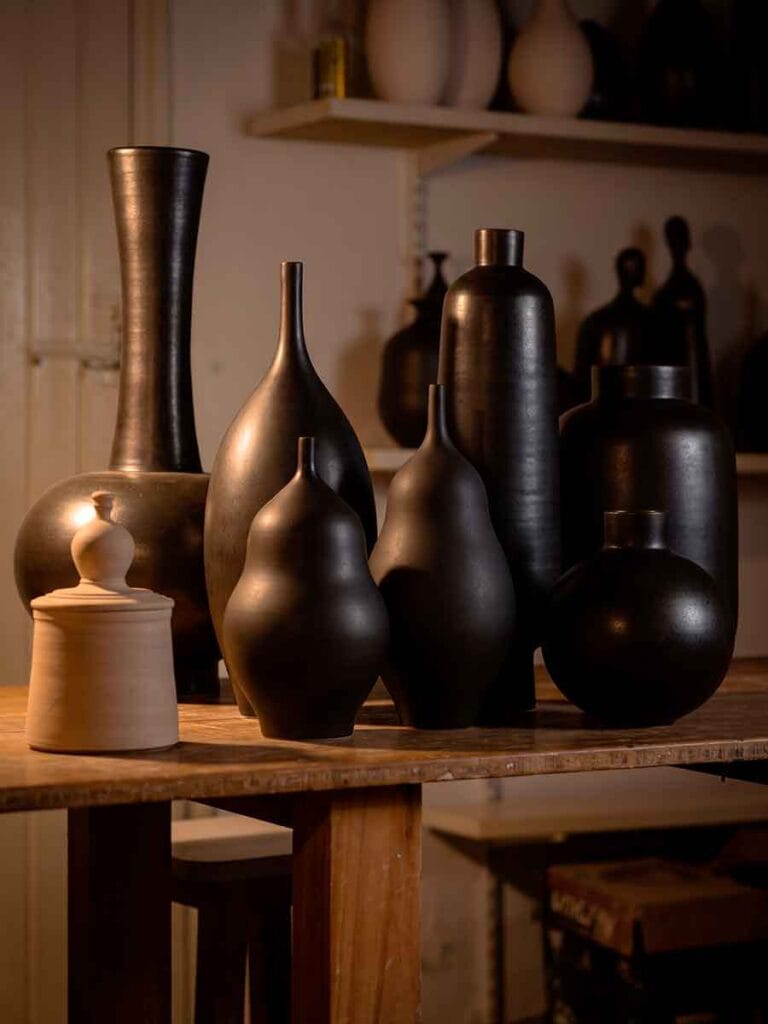
What Is Studio Pottery at Durao Studio
At Durao Studio, studio pottery means this: Fernando Durao throws every piece on the wheel in his studio in Lanús, Buenos Aires. He wedges the clay, centers it, opens it, raises the walls, and shapes the form. He trims every piece at leather-hard. He formulates the mineral slips — iron oxides, feldspars, silica, kaolin, quartz — and applies them by brush, in layers, to every piece individually. He loads the kiln, fires it to 1200°C, and waits for it to cool. He opens it and decides what passes and what doesn’t. He signs the certificate of authenticity for every piece that leaves the studio.
No step is delegated. No process is outsourced. No mold is used. This is what studio pottery is — not as a descriptor, but as a practice.
The result is an object that carries the decisions of one person, made under the specific conditions of one studio, on a specific day. It cannot be reproduced, not because Fernando has decided not to reproduce it, but because the conditions that produced it cannot be recreated exactly. That is not a marketing position. It is the nature of the work.
For the full context on how every piece at Durao Studio is made, read The Studio Pottery Process and How Ceramic Vases Are Made at Durao Studio.
Browse the collections — Unikas Black, Unikas Quartz, and Moradores. Each piece ships to the United States with a signed certificate of authenticity.
To inquire about a specific piece, contact Fernando directly.
Follow the studio: @durao.studio
For historical context on the studio pottery movement, see Studio pottery on Wikipedia.