Buenos Aires and Ceramics: A City With a Serious Studio Pottery Tradition
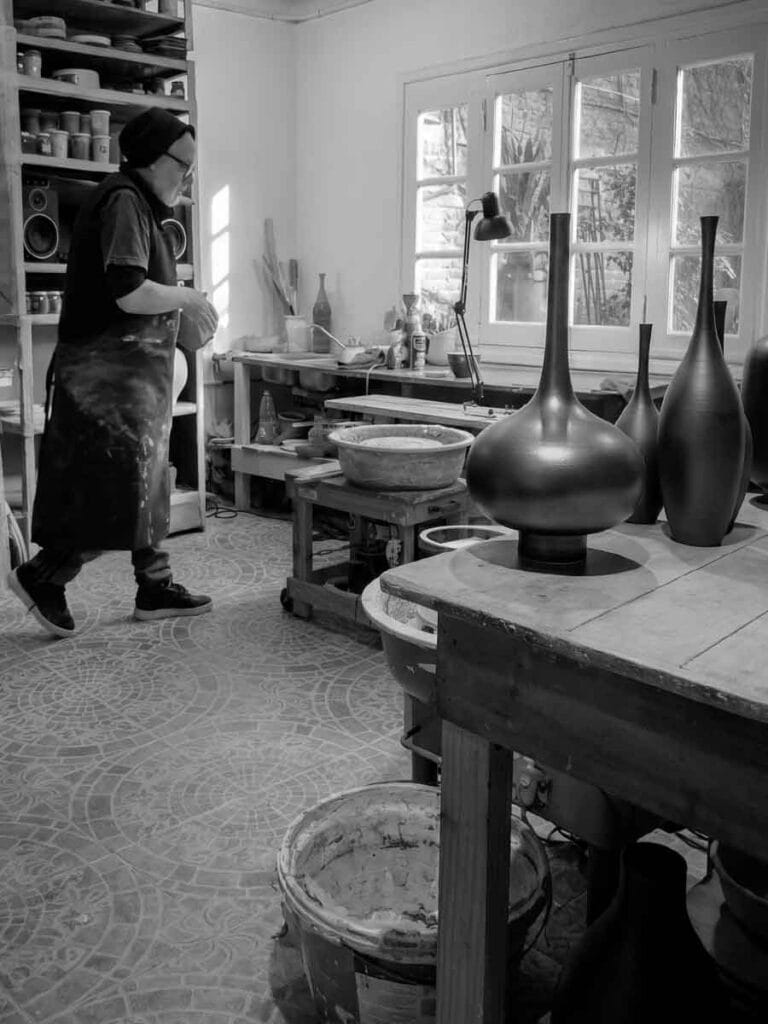
Buenos Aires is not a city that appears in the standard narratives of world ceramics. Those narratives tend to center on Japan, on England, on the American studio pottery movement of the mid-twentieth century. But Buenos Aires has its own ceramic tradition — serious, sustained, and largely invisible to the English-speaking market that is now discovering it.
Fernando Durao has worked within that tradition for thirty-five years. This is what that means — and why it matters when a piece from his studio in Lanús arrives at a door in New York or Miami.
Buenos Aires Studio Pottery — The Context
Argentina has a ceramic tradition that runs deeper than its international visibility suggests. The country’s art schools have produced generations of ceramicists who worked within both functional and sculptural traditions — often simultaneously, often without the institutional support that equivalent artists in Europe or North America received. The result is a body of work developed largely on its own terms, without the framework of the international art market to define or limit it.
Buenos Aires, as Argentina’s cultural center, concentrated much of that production. The city’s design and interior culture — serious, European-influenced, attentive to craft — created a sustained demand for studio ceramic work that existed independently of the commercial ceramic industry. Galleries, design fairs, and private collectors sustained a community of studio potters who worked at a level of technical and artistic rigor that had no reason to announce itself to anyone outside the city.
Fernando Durao entered that tradition in the late 1980s and has remained in it. His thirty-five years of studio practice were not formed in isolation — they were shaped by a city with a culture of craft that takes ceramic art seriously as a discipline.
Fontenla, Casa FOA, and the Buenos Aires Design Ecosystem
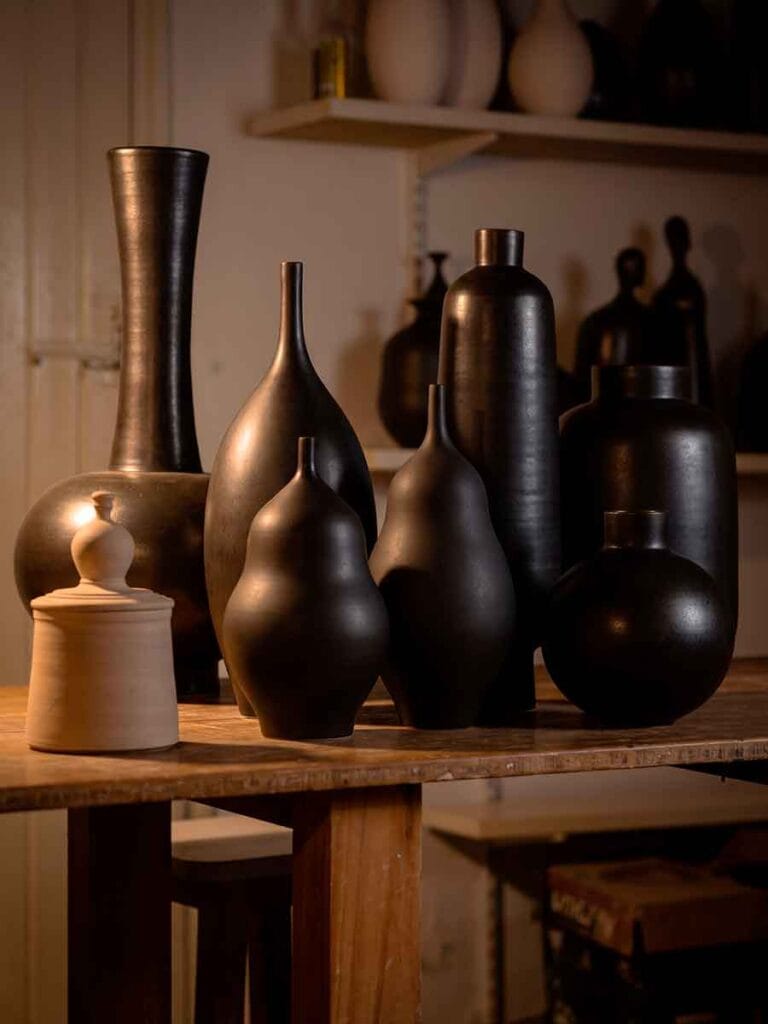
The design ecosystem that Fernando has worked within is not marginal. Fontenla — one of Argentina’s most respected interior design references, with decades of presence in the premium residential and hospitality market — has carried Fernando’s work. Hugo Di Marco, a leading figure in Argentine interior design, has placed Fernando’s pieces in projects shown at Casa FOA, the country’s most prestigious annual design showcase.
These relationships were not built through marketing. They were built through the work — through the quality and consistency of what Fernando produces in his studio over time. Fontenla and Di Marco are not organizations that place objects for decorative value alone. They place objects because those objects belong in the spaces they design.
For a US buyer, these references provide something that certificates and descriptions cannot: independent verification, from within a serious design culture, that the work is what it claims to be.
What Working in Buenos Aires Means for the Work
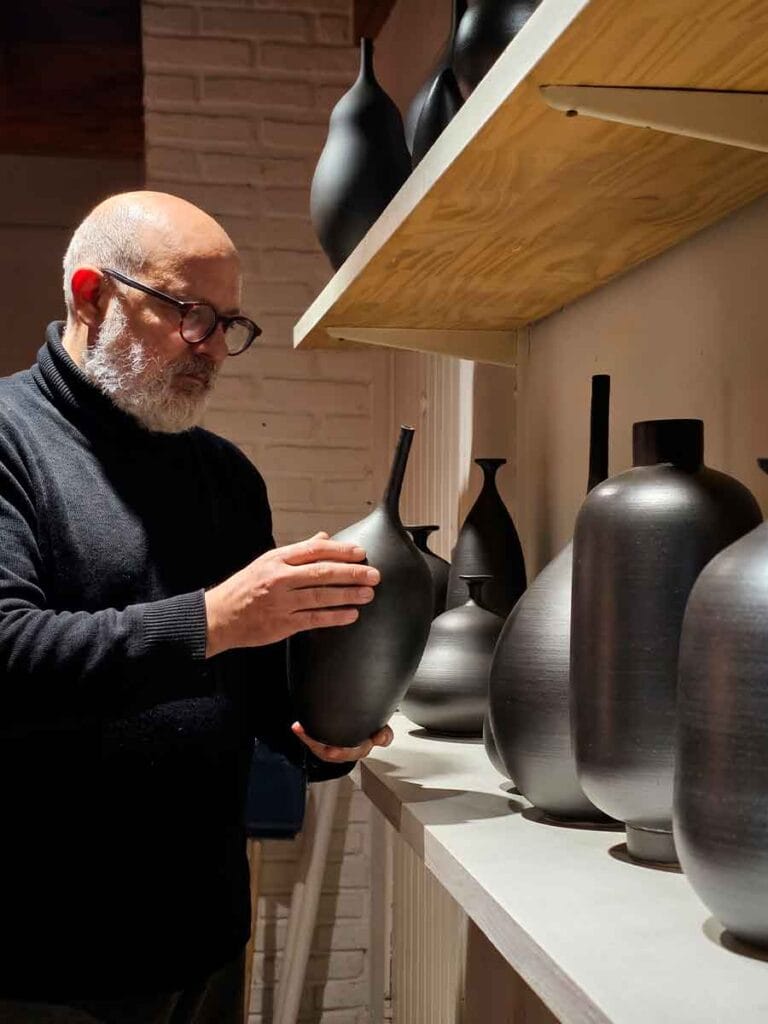
Working in Buenos Aires — specifically in Lanús, a city in the southern metropolitan area — shapes the work in ways that are not immediately visible in the finished object but are present in it nonetheless.
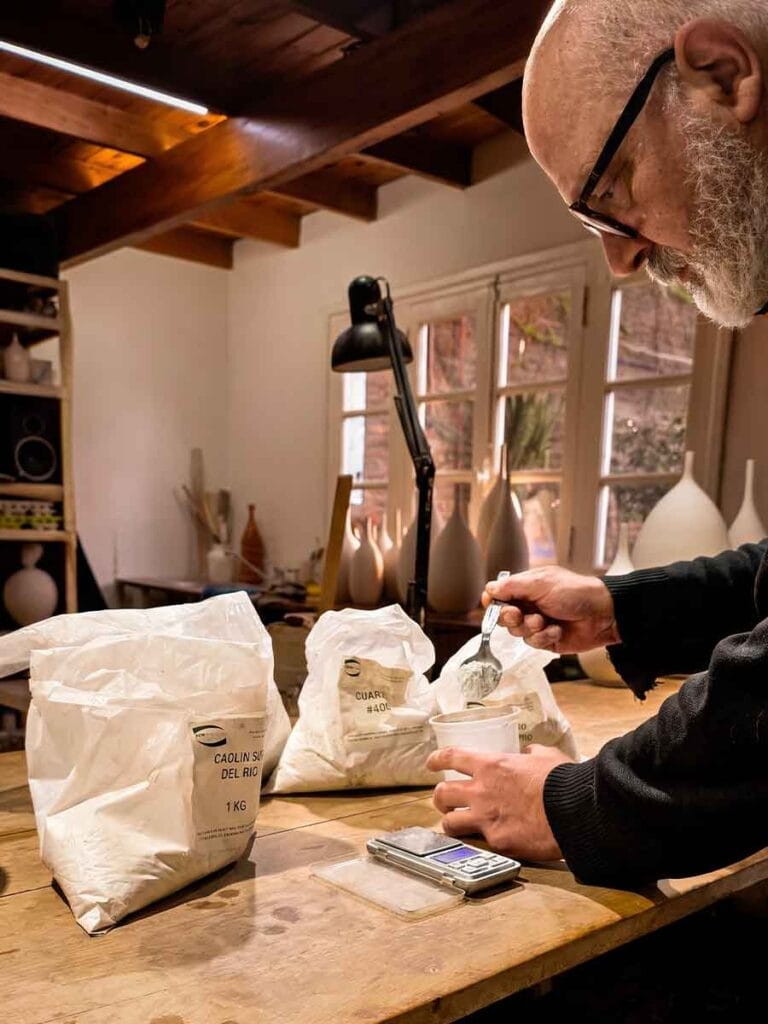
The materials Fernando uses are Argentine: clays sourced from specific deposits, minerals processed locally. The aesthetic context is a city where European design culture and Latin American materiality coexist — where the elegant and the rough are not opposites but partners. The light is specific: the intense, low-angle afternoon light of the Southern Hemisphere that enters Fernando’s studio through the windows and has been part of how he sees form and surface for thirty-five years.
None of this is content. It is not something Fernando adds to the work. It is the condition in which the work was made — and it is present in every piece that leaves the studio, whether the buyer knows Buenos Aires or not.
Shipping from Buenos Aires to the United States — How It Works
Every piece at Durao Studio ships from Buenos Aires to the United States door-to-door, fully insured. The shipping is international freight — not postal — and it is handled with the same care that goes into making the piece. Fernando packs each piece individually, using materials developed over years of shipping fragile stoneware over long distances.
The price quoted for any piece from Durao Studio includes shipping. There are no additional freight charges. Each piece also ships with a signed certificate of authenticity and complete customs documentation — relevant for the classification of the piece as original artwork under applicable US tariff codes.
The journey from a studio in Lanús, Buenos Aires to a home in New York or Miami is not a logistical abstraction. It is a specific distance that a specific object travels, packed by the hands that made it, to arrive at a space where it will live. That distance is part of the piece’s provenance — and part of what makes it different from anything that was made locally, at scale, without the conditions that produced it.

Browse the collections made in Fernando Durao’s Buenos Aires studio — Unikas Black, Unikas Quartz, and Moradores. Each piece ships to the United States with a signed certificate of authenticity and full documentation.
For more on the artist behind the work, read About Fernando Durao. For the full context on what studio pottery means, see What Is Studio Pottery — And Why the Studio Matters.
To inquire about a specific piece, contact Fernando directly.
Follow the studio: @durao.studio
For context on Buenos Aires as a cultural center, see Buenos Aires on Wikipedia.