White Stoneware Vases: Why Texture Matters More Than Color
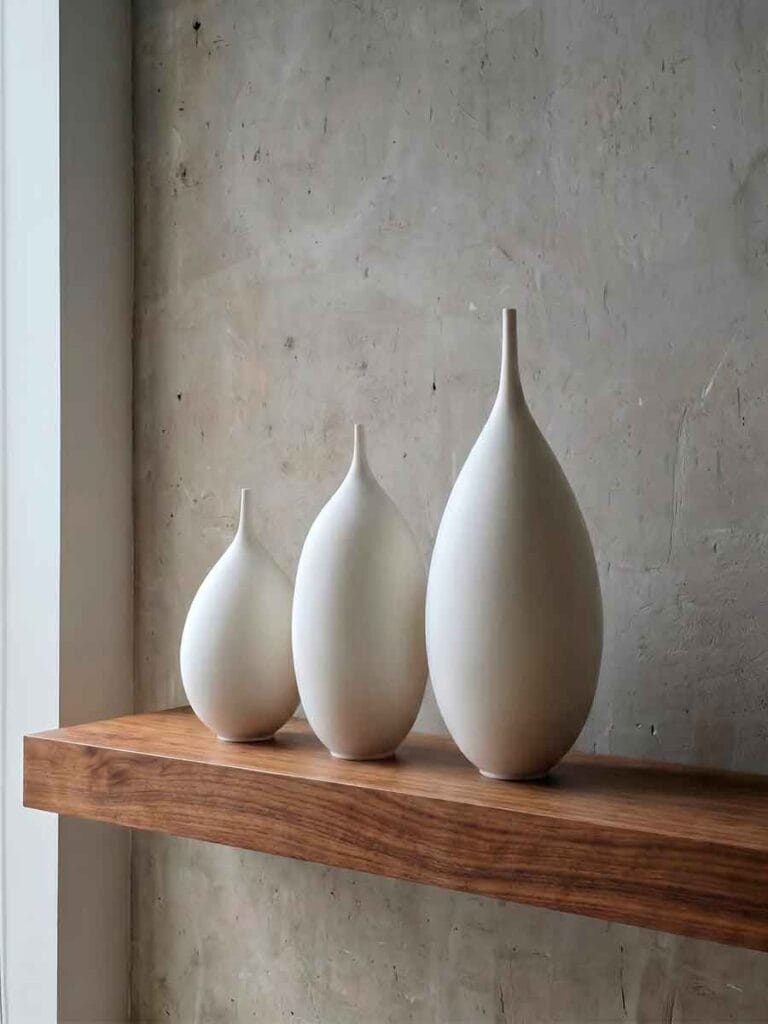
White is the most demanding color in ceramics. Not because it is technically difficult to achieve — a commercial white glaze is available in any ceramics supply store — but because a white surface has nowhere to hide. Every decision made during the making of the piece is visible: the texture, the brushwork, the way the surface was built up layer by layer. A white stoneware vase either has depth or it doesn’t. There is no color to compensate for what’s missing.
This is what defines the Unikas Quartz collection — and why texture matters more than color when you’re choosing a white ceramic piece for your home.
What Makes a White Stoneware Vase Different
The word “white” covers an enormous range of surfaces in ceramics. There is the clinical white of porcelain — smooth, translucent, refined to the point of abstraction. There is the warm white of earthenware — porous, matte, slightly rough to the touch. And there is the mineral white of high-fire stoneware finished with a raw slip — a surface that reads more like compressed stone than like fired clay.
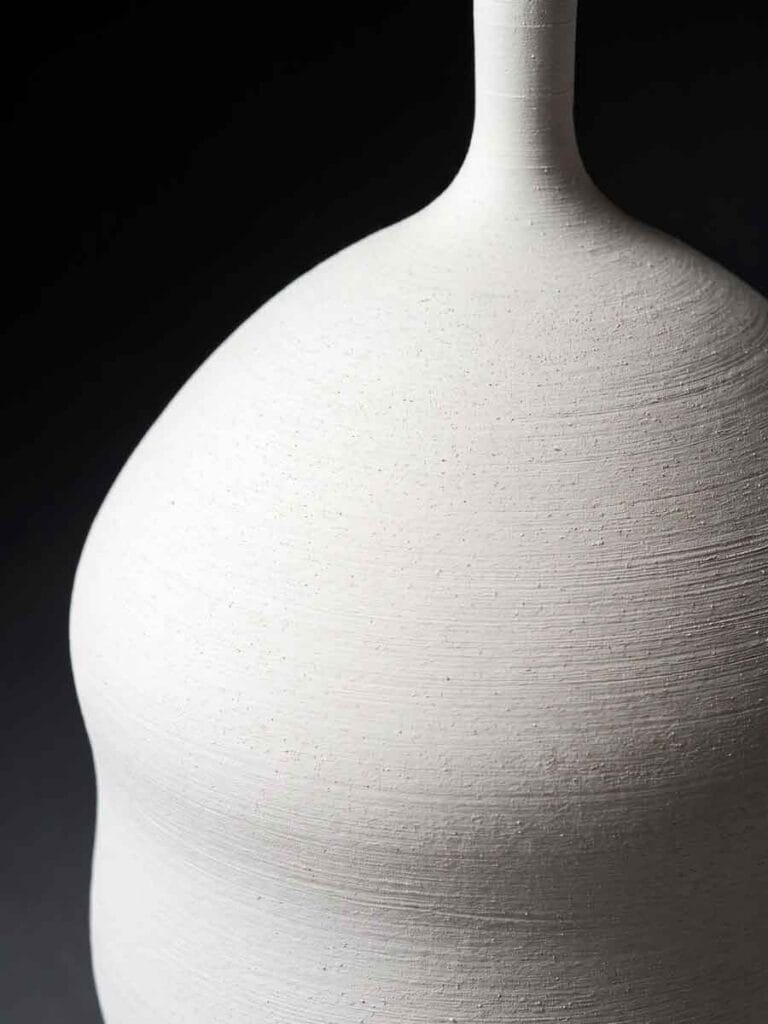
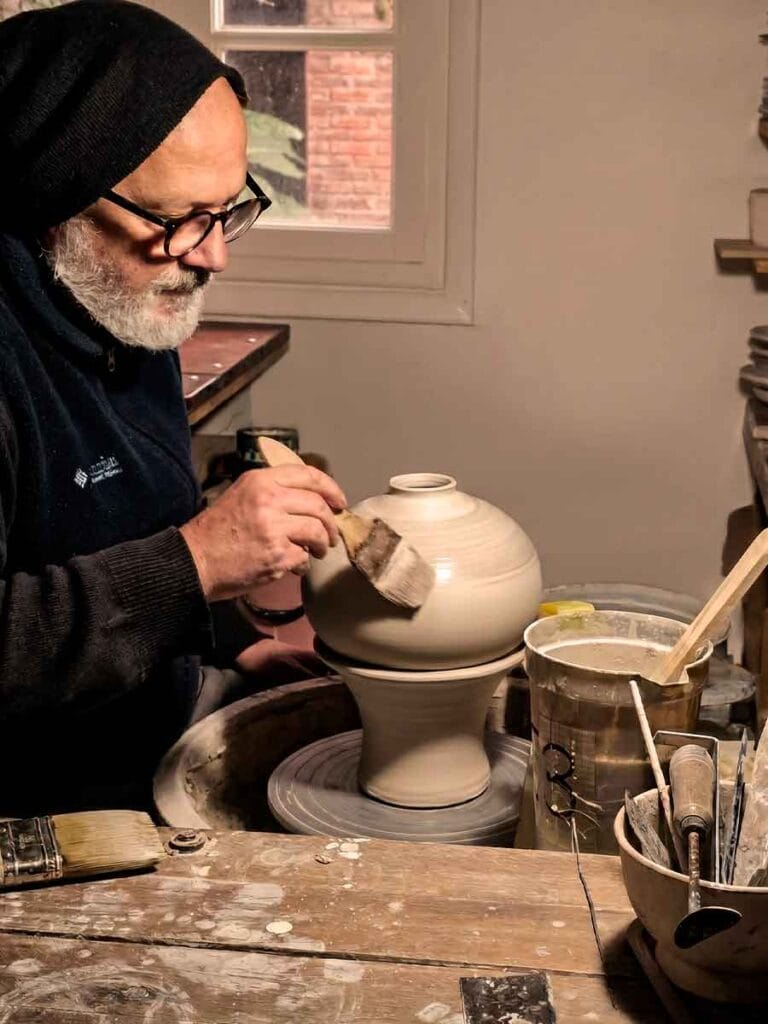
The Unikas Quartz collection sits firmly in that third category. Each white stoneware vase in the collection is finished with a slip built from kaolin, feldspar, and quartz — applied by brush in multiple layers onto the raw clay body before firing. At 1200°C, those minerals fuse permanently with the stoneware beneath them. What emerges from the kiln is a surface that is matte and coarse to the touch — not rough in the sense of unfinished, but textured in the sense of real. Like the surface of a stone that has been worn by water for a long time.
That texture is not decorative. It is the direct result of the mineral composition of the slip and the temperature at which it was fired. It cannot be replicated by a commercial glaze.
Why White Ceramic Is Harder to Do Well Than It Looks
A matte black surface forgives a great deal. Imperfections in the application, variations in the firing, subtle inconsistencies in the slip — these are absorbed by the darkness and become part of the character of the piece. Black is generous to the maker.
White is not. A white stoneware vase made with a mineral slip shows everything: the direction of each brushstroke, the places where one layer meets another, the way the surface builds up differently on convex and concave areas of the form. Every decision is legible.
This is why Fernando’s Quartz slip formula took years to develop. The mineral composition — kaolin for the whiteness and the fine particle structure, feldspar for the way it fluxes at high temperature, quartz for the hardness and the slightly gritty texture it produces at the surface — had to be calibrated not just for color but for the specific texture that emerges after firing. Too much feldspar and the surface reads as smooth, almost glossy. Too much quartz and it becomes truly rough, losing the refinement that makes the piece work as a decorative object. The balance is narrow. It took many firings to find it.
How Light Changes a White Stoneware Vase
The most distinctive quality of a mineral quartz surface is how it reads in different light conditions — and how much that reading can vary.
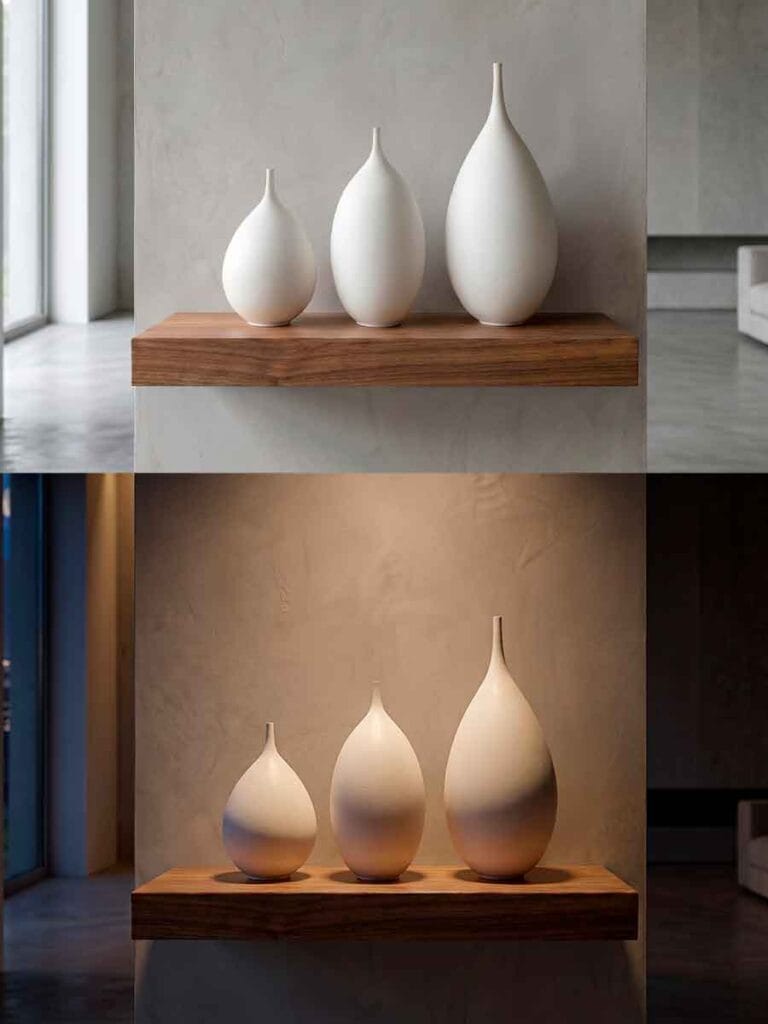
In direct natural light, the surface of a Unikas Quartz vase is bright and textured — the matte finish absorbs the light evenly, and the coarse texture creates small shadows that give the surface depth and relief. The whiteness reads as warm, almost creamy, never clinical.
In indirect or low light, the same surface becomes quieter — the texture flattens slightly, the color deepens toward grey, and the piece takes on a different kind of presence. What was bright and textured in the afternoon becomes something more contained and deliberate in the evening.
This responsiveness to light is one of the properties that distinguishes a mineral slip surface from a commercial glaze. A glaze is sealed — it reflects light in the same way regardless of conditions. A mineral slip is porous at the micro level — it absorbs and diffuses light rather than reflecting it, and that diffusion changes with the quality and angle of the light source.
A white stoneware vase with a genuine mineral surface is never exactly the same object twice. That is not a limitation. It is the point.
How to Style a White Stoneware Vase
A white stoneware vase with a mineral texture works differently in an interior than a smooth or glazed white ceramic. A few principles that hold consistently:
With warm materials: The mineral whiteness of the Quartz slip reads particularly well against warm woods, natural linen, and raw brass. The slight warmth in the white — the kaolin and quartz produce a white that is never pure, always slightly warm — connects with organic materials in a way that a clinical porcelain white does not.
Against dark walls or surfaces: A white stoneware vase in front of a dark wall, a slate surface, or a dark wood shelf creates a composition that doesn’t need anything else. The contrast is enough.
In groups: Three white stoneware vases in graduated sizes work as a composition — the texture unifies them, the variation in form keeps them from reading as a set. They look related without looking identical.
Without flowers: As with the black collection, a white stoneware vase with genuine surface depth doesn’t need to be filled. The object itself is the point. The Unikas Quartz pieces are designed to be decorative objects first — vessels second, if at all.
For spaces that want both white vessels and sculptural presence, the Moradores sculptures work alongside the Quartz collection — same stoneware body, different surface and form.
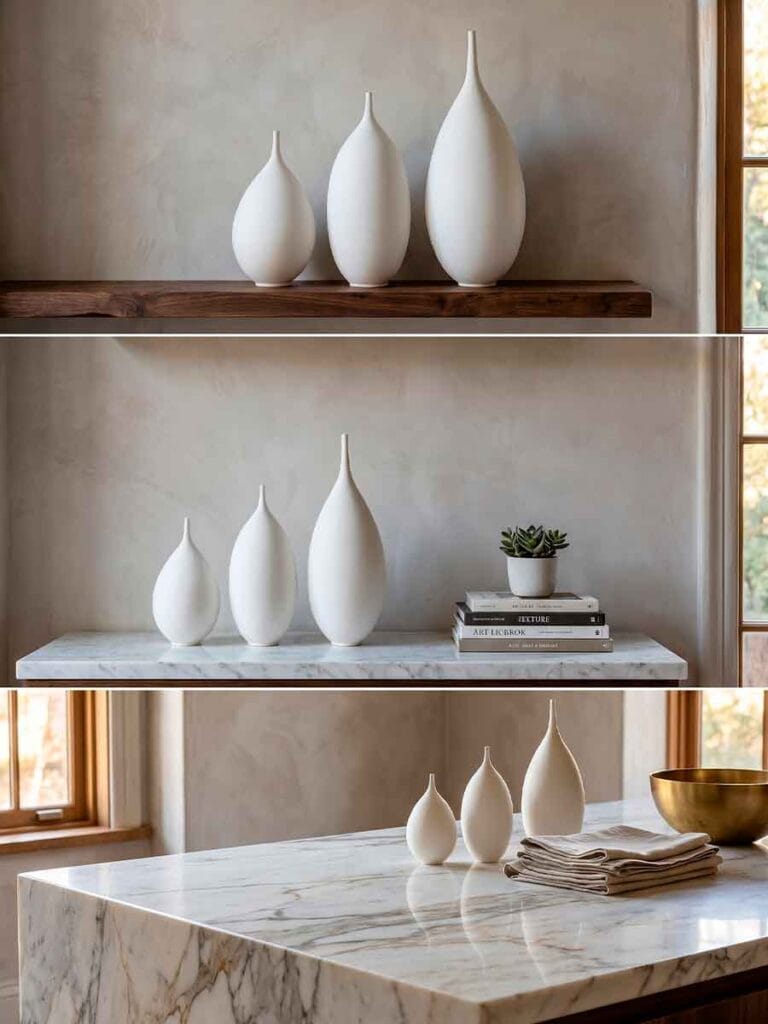
Browse the full Unikas Quartz collection — white stoneware vases with a mineral quartz surface, handmade in Buenos Aires and shipped to the United States with a signed certificate of authenticity.
Read more about the surface in Mineral Slip Ceramics — No Commercial Glazes, or about the material in What Is High-Fire Stoneware. For the black stoneware collection, see Unikas Black.
To inquire about a specific piece, contact Fernando directly.
For technical context on kaolin and its use in ceramics, see Kaolin on Wikipedia.