How to Decorate with Ceramic Vases — The Sculptural Approach

The most effective way to decorate with ceramic vases is to stop thinking of them as containers. A wheel-thrown stoneware vase with genuine formal presence — the right weight, the right surface, the right relationship between body and neck — doesn’t need to hold anything. It is already doing what it was made to do: occupy space with intention.
This is the sculptural approach to decorating with ceramic vases. Not a styling trick. A different way of understanding what these objects are.
Decorate with Ceramic Vases by Letting the Form Do the Work
In 2026, interior designers in the United States are increasingly treating ceramics as sculptural objects rather than accessories — pieces that anchor a composition rather than fill it. A single handmade stoneware vase on a console can hold an entire wall. A group of three on a shelf can organize a room. The form does the work. Nothing needs to be added.
The practical rule: if a vase needs something inside it to justify its presence, the piece isn’t strong enough. A ceramic object with real formal depth — a surface that responds to light, a silhouette that reads from across the room, a weight that communicates permanence — stands on its own. That is the starting point for decorating with ceramic vases at this level.
At Durao Studio, none of the pieces in the Unikas Black, Unikas Quartz, or Moradores collections are designed to hold anything. They are designed to be looked at.
Negative Space — The Element Most People Overlook
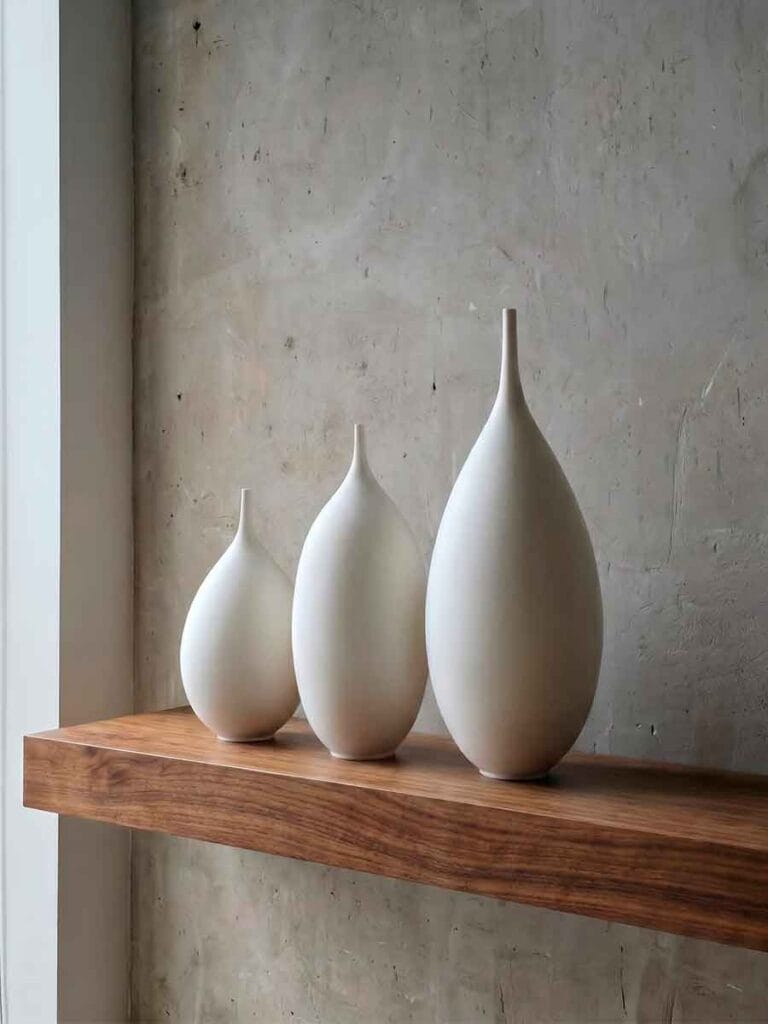
When decorating with ceramic vases, the space around the piece is as important as the piece itself. Negative space — the empty area surrounding an object — is not wasted space. It is the frame that allows the form to be read clearly.
Crowding a strong ceramic piece with books, plants, candles, and trays reduces it to one element in a collection. Giving it room to exist allows it to read as what it is: a singular object with its own presence.
A useful test: place the piece, step back, and resist the impulse to add anything for a few days. In most cases, nothing needs to be added. The space around the ceramic will begin to feel intentional rather than empty — which is the difference between a designed interior and a filled one.
How Light Changes the Way Ceramic Vases Decorate a Space
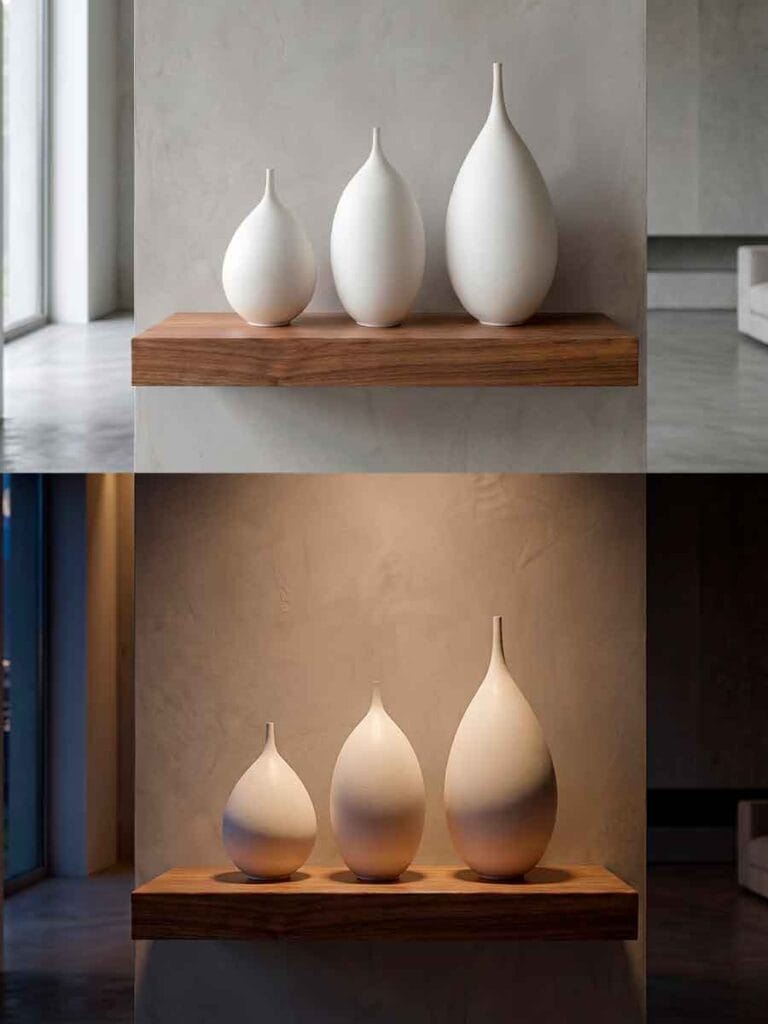
A ceramic vase finished with a mineral slip surface — like every piece in the Unikas Black and Unikas Quartz collections — is not the same object in different light conditions. Understanding this is essential to decorating with ceramic vases effectively.
In direct natural light, the mineral texture of the surface becomes fully visible. The slip reads as coarse and active, with small shadows in the recesses of the brushwork. The form is fully present — every decision made during the making is visible.
In diffused or indirect light, the same surface quietens. The texture flattens slightly, the color deepens, and the piece takes on a more concentrated, contained presence. Less surface, more silhouette.
In low or artificial light — a lamp from beside or below the piece — a matte black stoneware vase picks up a warmth it doesn’t carry in daylight. The material behaves differently. The object becomes different.
This responsiveness to light is a quality, not a variable to control. Position a piece where it will receive the light you want it to have — morning light, afternoon light, evening lamp. Then let it change.
Placement — Where to Decorate with Ceramic Vases in a Room
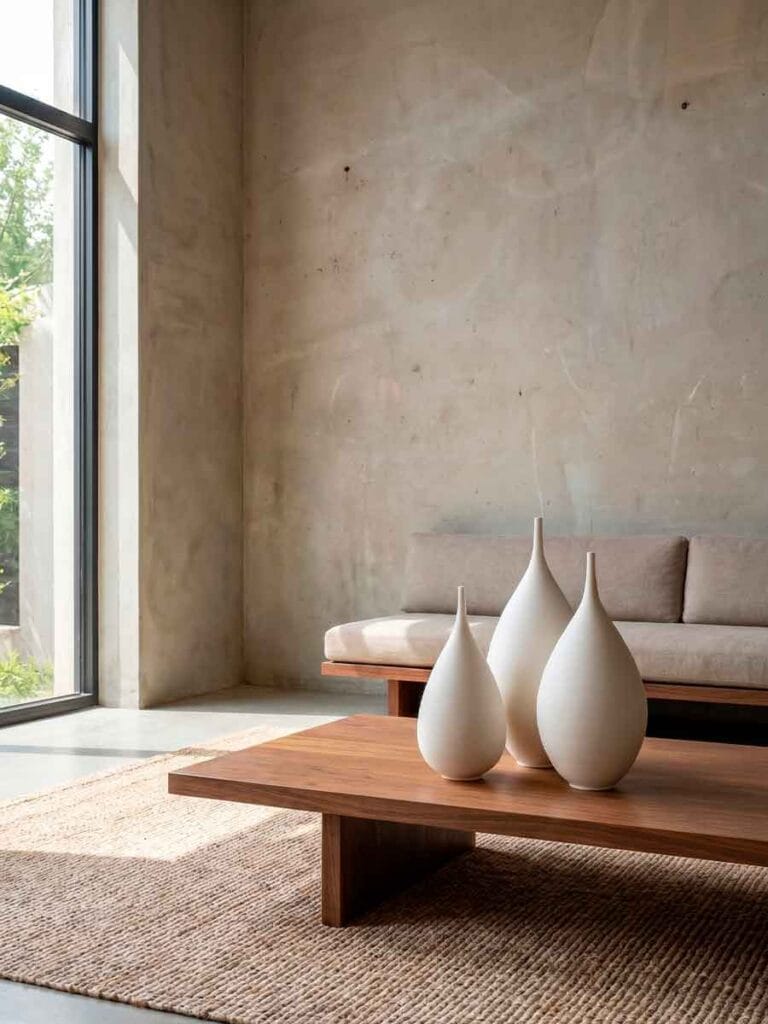
The placement of a ceramic piece relative to its surface and the space around it is the most important decision in the sculptural approach to decorating.
On a shelf: One piece or a group of three in graduated sizes. The piece needs enough vertical presence to read from across the room. Keep the shelf largely clear — the ceramic needs room to be itself, not a detail in a crowded arrangement. Odd numbers read as intentional; single pieces read as confident.
On a console or sideboard: A taller form works well here. The horizontal mass of the console provides enough visual grounding to support a tall, narrow vase without competition. One additional object of a completely different material — a stone, a branch, a single book — creates contrast without clutter.
On a coffee table: Lower, wider forms. The scale of a coffee table object should not interrupt sightlines across the room. A wide-bodied stoneware vase with a short neck reads as grounded on a coffee table — present without demanding.
On the floor: Large format pieces work on the floor, in a corner, against a wall of raw plaster or concrete. A tall, singular form in a corner can reorganize an entire room. This is where form matters most — the piece holds the space entirely on its own.
Decorating with Ceramic Sculptures — The Moradores
Decorating with ceramic sculptures follows the same logic as decorating with vases — but the stakes are higher. A sculpture doesn’t have the functional suggestion of a vase to anchor its presence. It has to earn its place in a room on formal terms alone.
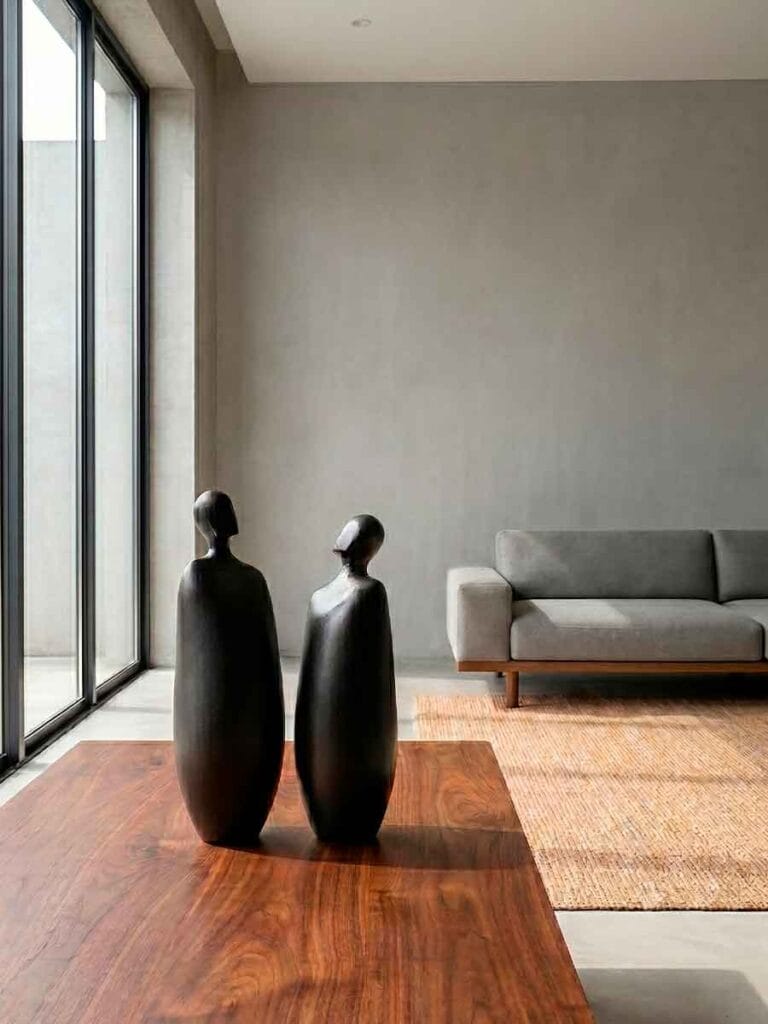
The Moradores series at Durao Studio are abstract figurative sculptures — forms that suggest a body, a posture, a presence, without representing any of them literally. Each piece is begun on the wheel and developed by hand through pinching, paddling, and adding clay, until the form resolves into something that could not have been planned and cannot be repeated.
When placed correctly — on a console, a dining table, a low sideboard, with sufficient negative space around them — the Moradores reorganize the room they’re in. They introduce a human register without introducing a human figure. They make the space feel inhabited.
A pair of Moradores on a dining table, with nothing else on the surface, is a more powerful composition than any floral arrangement. They stay. They don’t wilt. They change with the light. And they will still be there, in exactly the same form, in thirty years.
Browse the full range of pieces available to decorate with at Durao Studio — Unikas Black, Unikas Quartz, and Moradores. Each piece is handmade in Buenos Aires and ships to the United States with a signed certificate of authenticity.
For more on choosing and placing ceramic sculpture, read Abstract Ceramic Sculpture for the Home. For the full context on studio pottery in designed interiors, see Studio Pottery for Interior Design — What Designers Should Know.
To inquire about a specific piece, contact Fernando directly.
Follow the studio: @durao.studio
For further reading on sculptural approaches to interior design, see Interior design on Wikipedia.