Handmade Ceramic Art for Interior Design: A Practical Guide for Designers
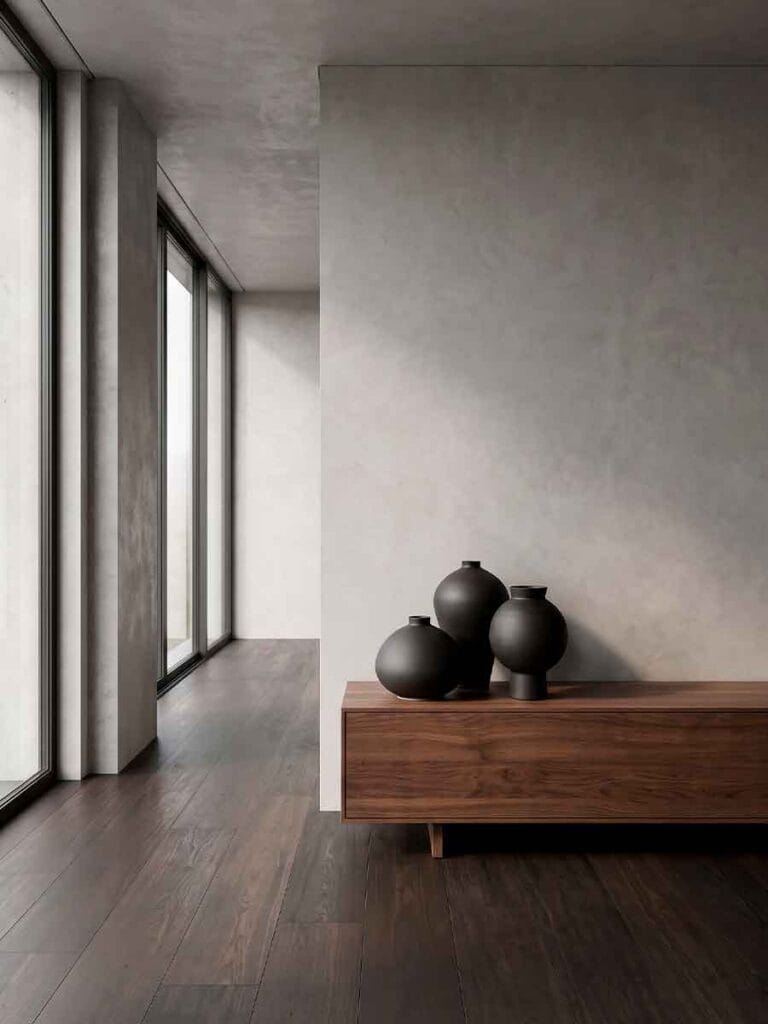
Ceramic art for interior design occupies a specific position in the hierarchy of decorative objects — above accessories, below fine art, and increasingly indistinguishable from both. For interior designers working on residential and hospitality projects, understanding how to source, specify, and work with studio ceramic art is becoming a practical skill, not a specialty interest.
This is a guide to doing that well — from identifying genuine studio pottery to working directly with an artist, with specific reference to the collections at Durao Studio.
Why Ceramic Art for Interior Design Has Changed
For most of the last decade, ceramic objects in interior design meant commercially produced accessories — consistent, affordable, and interchangeable. A matte white vase from one supplier looked almost identical to a matte white vase from another. The category was defined by coordination, not by authorship.
That has changed. The shift is driven by clients who are asking for spaces that cannot be replicated — not unusual in terms of style, but specific in terms of provenance. Objects with a traceable origin, a named maker, a documented process. Ceramic art for interior design at this level means artist-direct sourcing: working with a studio, not a catalog.
Fernando Durao has worked with some of Argentina’s most respected interior design references — including Fontenla and Hugo Di Marco, whose projects have been featured at Casa FOA, the country’s most prestigious design showcase. That experience informs how he understands the relationship between a ceramic object and the space it will occupy.
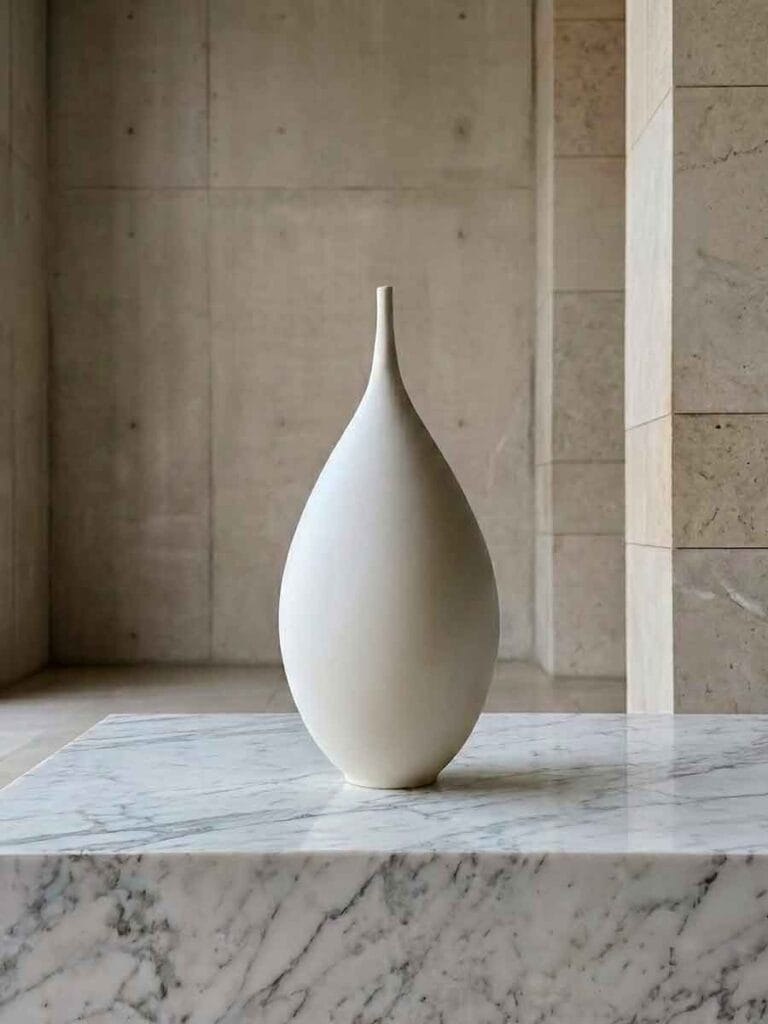
How to Identify Genuine Studio Ceramic Art for Interior Design
The market conflates studio pottery with commercial ceramics described as “artisan” or “handmade.” For a designer specifying objects for a serious project, the distinction matters — both for the quality of the result and for the credibility of the provenance documentation.
Genuine studio ceramic art for interior design has three identifiable characteristics.
A named maker with a traceable process. The piece was made by a specific person, in a specific studio, through a documented sequence of steps. Fernando Durao — wheel-throwing in high-fire stoneware, finishing with custom mineral slips formulated over thirty-five years — is the process. The process is not outsourced.
A surface that cannot be replicated. A commercial glaze produces the same surface across every piece that uses it. A mineral slip formula developed by a studio — iron oxides, feldspars, silica, kaolin, quartz — produces a surface that belongs to that studio alone. The Unikas Black and Unikas Quartz finishes at Durao Studio cannot be found anywhere else, because the formulas are Fernando’s.
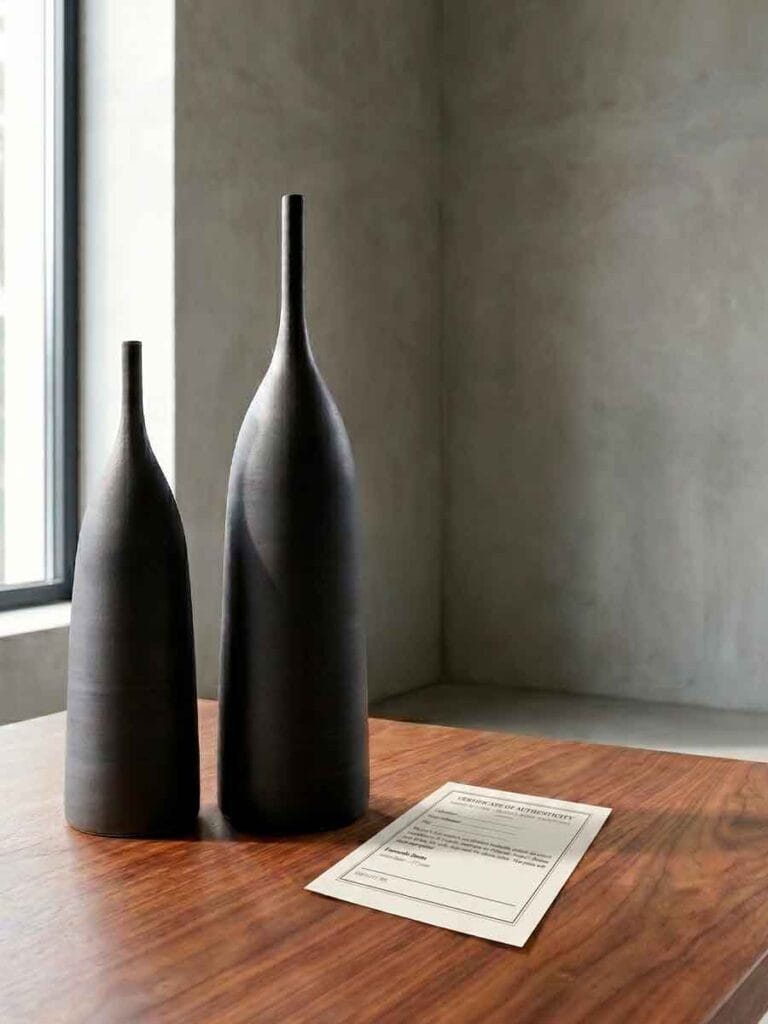
Documentation of singularity. Every piece at Durao Studio ships with a signed certificate of authenticity confirming that the work is an original, one-of-a-kind object — not a reproduction, not part of an edition. That documentation is the formal record of what the designer is specifying.
Specifying Ceramic Art for Interior Design — Practical Considerations
For designers working with studio ceramic art for the first time, several practical considerations determine whether the specification will succeed.
Scale and visual weight. High-fire stoneware has more visual weight than earthenware or mid-fire ceramics of the same dimensions. A Durao Studio piece that reads as medium-sized in a photograph will read as substantial in a room. This is a quality — but it requires the designer to account for it in the composition of the space.
Surface and light. Every surface in the Unikas Black and Unikas Quartz collections is a mineral slip — matte, textured, and responsive to light in ways that glazed surfaces are not. The piece will read differently in morning light, afternoon light, and artificial light. This is not a problem to manage but a property to position. The designer’s job is to place the piece where it will receive the light that suits it.
Availability and lead time. Studio ceramic art is not inventory. Each piece exists once. Working with Durao Studio means working with what is currently available — or building a relationship that allows advance notice of new work. Fernando does not produce custom work to specification, but he can communicate what is in progress and what will be available.
Shipping and documentation. All pieces ship from Buenos Aires to the United States, door-to-door, fully insured. Each piece ships with a signed certificate of authenticity and complete documentation — relevant for customs classification as original artwork under applicable US tariff codes.
The Moradores — Ceramic Art for Interior Design Beyond the Vessel
For projects that require something beyond a decorative vessel — a stronger presence, a more explicitly artistic register — the Moradores series offers a different category of object.
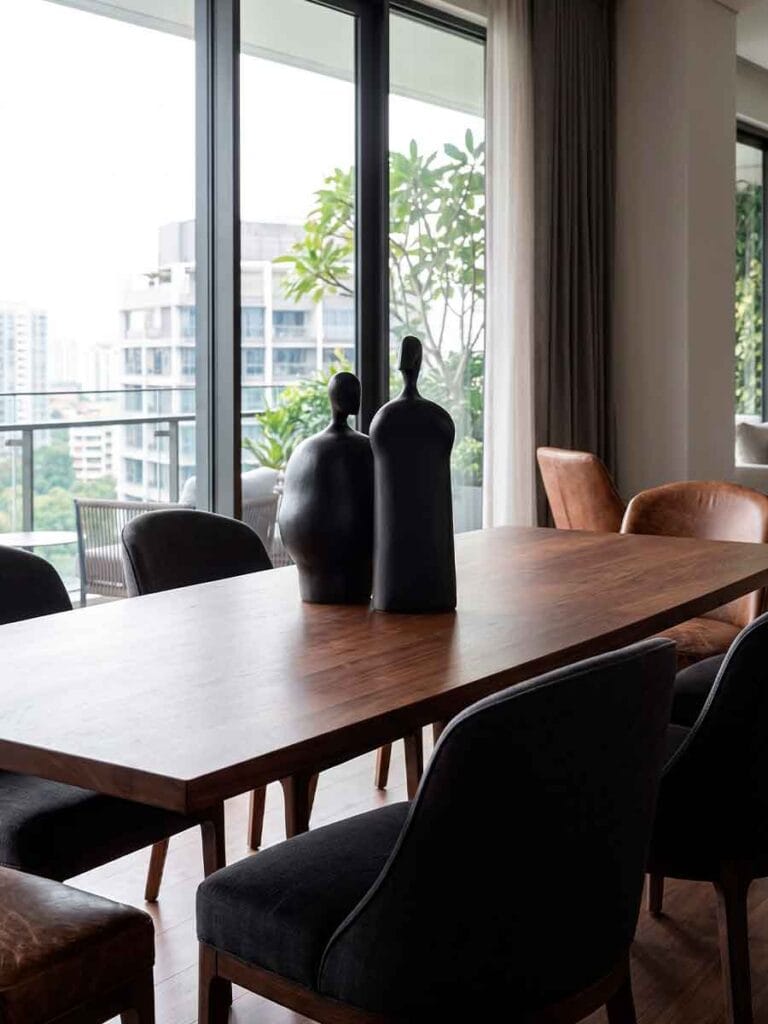
These are abstract figurative sculptures: forms begun on the wheel and developed by hand through pinching, paddling, and adding clay, until the piece resolves into a presence that is neither purely abstract nor literally figurative. Each Morador inhabits a room the way a figure inhabits a room — with posture, weight, and a specific relationship to the space around it.
In designed interiors, the Moradores work particularly well on dining tables, entry consoles, and low sideboards — surfaces where the human scale of the sculpture creates a dialogue with the people using the space. They have been placed in projects alongside Fernando’s Unikas collections, where the shared material logic — same stoneware body, same black mineral slip — creates coherence across different types of objects.
Each Morador is one of a kind. Once sold, the specific form and surface of that piece will not exist again.

Browse the collections available for interior design specification — Unikas Black, Unikas Quartz, and Moradores. All pieces ship to the United States with full documentation including a signed certificate of authenticity.
For further context on sourcing studio pottery for design projects, read Studio Pottery for Interior Design — What Designers Should Know and One of a Kind Ceramic Art: What It Really Means.
To discuss a project or inquire about available work, contact Fernando directly. All inquiries are answered personally.
Follow the studio: @durao.studio
For context on the role of decorative arts in interior design, see Decorative arts on Wikipedia.