Studio Pottery vs Mass-Produced Ceramics: What Interior Designers Should Know

Interior designers who source ceramics for residential and hospitality projects face a choice that the market doesn’t always make clear: studio pottery for interior design is a fundamentally different category from mass-produced ceramics, even when both are described as “handmade” or “artisan.”
The difference is not only aesthetic. It affects how a piece reads in a finished interior, how it holds up over time, and what it communicates about the space it occupies. This is what interior designers should know before specifying ceramic objects for a project.
How to Tell Studio Pottery from Commercial Reproduction
The term “handmade” has been so broadly applied that it has lost most of its meaning. A piece can be described as handmade if a human being was involved in any part of its production — including applying a commercial glaze to a mold-cast form, or assembling slip-cast components. That is not what studio pottery is.
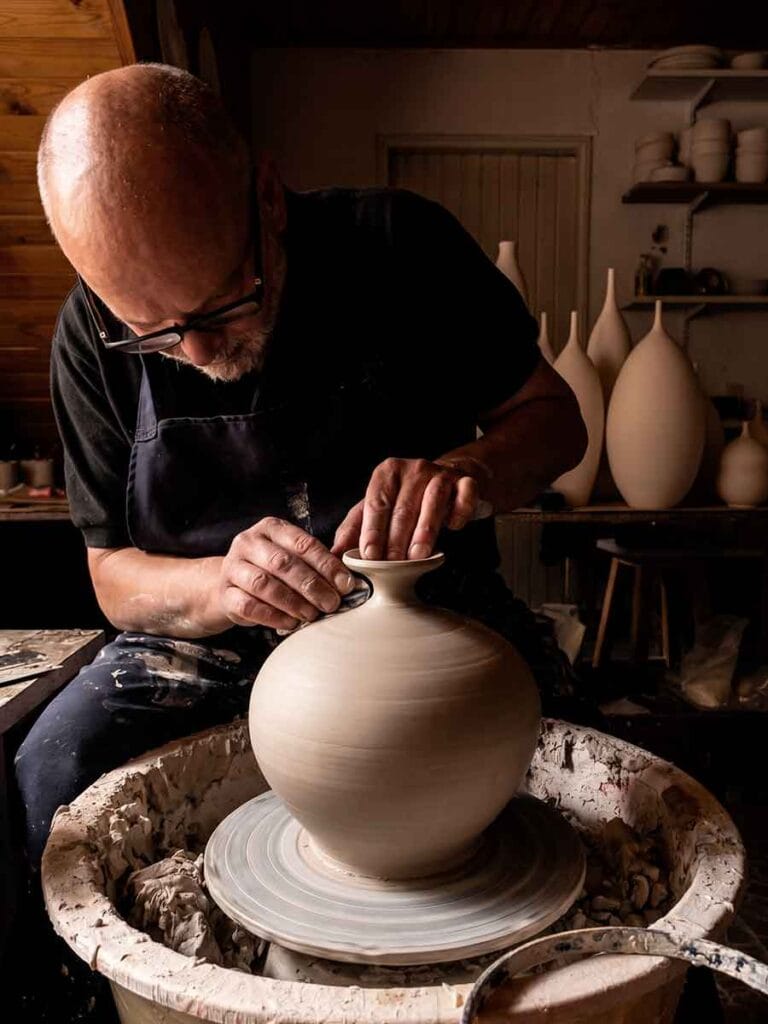
Studio pottery is made entirely by the hands of a single maker, from raw clay to finished object. The form is not predetermined by a mold — it is pulled from the clay on a wheel or built by hand, and it reflects the decisions of the potter at every stage. The surface is not a commercial finish — it is a formula developed by the studio, applied by the maker, and inseparable from the piece it covers.
The practical test for an interior designer: ask who made it and how. If the answer is a factory in any country, it is not studio pottery regardless of how it is described. If the answer is a specific person, in a specific studio, with a traceable process — that is studio pottery.
Why Interior Designers Are Moving Toward Studio Pottery
The shift toward artist-direct sourcing in interior design is not a trend. It is a response to a problem that mass production cannot solve: the problem of sameness.
When every project sources from the same commercial suppliers, every finished interior looks like a variation of the same interior. The objects are well made, the finishes are consistent, the proportions are correct — and the result is a space that could belong to anyone. Studio pottery for interior design solves that problem structurally. A wheel-thrown vase by a specific potter, finished with a mineral slip developed over decades, cannot appear in any other project — because it cannot be reordered, reproduced, or replaced by an equivalent.
That singularity is increasingly what clients are asking for. Not unusual objects — specific objects. Objects with a traceable origin, a named maker, a documented process. Studio pottery provides all of that, and it does so in a material — high-fire stoneware — that holds up to the scrutiny of a serious interior over time.
Studio Pottery for Interior Design — What to Specify
For an interior designer working with studio pottery for the first time, a few practical considerations:
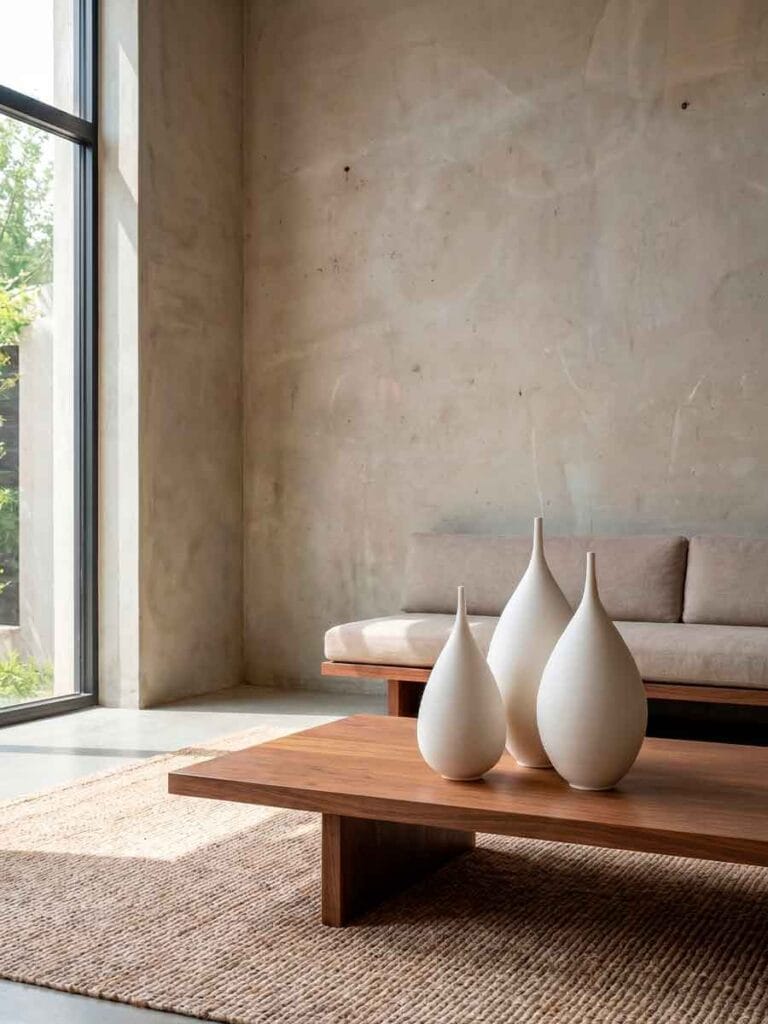
Scale: Studio pottery ranges from tabletop objects to floor pieces. Specifying the right scale for a space requires understanding not just the dimensions of the piece but its visual weight — how much of the room it commands relative to its physical size. High-fire stoneware has more visual weight than earthenware of the same size, because its density reads differently in a space.
Finish and light: The surface finish of a studio piece changes with the light conditions of the space. A mineral slip surface — matte, textured, porous at the micro level — reads differently in direct natural light, diffused artificial light, and low evening light. This is a quality, not a variable to be controlled. Specifying studio pottery means accepting that the piece will be different at different times of day, and that this is part of what makes it worth having.
Provenance and documentation: For serious projects, the certificate of authenticity that accompanies each piece at Durao Studio provides the documentation clients increasingly expect — confirmation of the maker, the process, and the singularity of the object. That documentation also has practical relevance for pieces that cross international borders.
Lead time: Studio pottery is not inventory. Each piece exists once, and availability depends on what the studio has produced and selected. Working with a studio potter means working with what exists, or building a relationship that allows advance notice of new work.
Working with Fernando — How the Process Works
Fernando Durao works directly with interior designers, architects, and private clients. There are no galleries, no agents, no intermediaries. The conversation happens between the designer and the maker.
The process is straightforward: contact Fernando with the project context — the space, the scale, what you’re looking for — and he will share what is currently available or in production. Pricing includes door-to-door shipping from Buenos Aires to any address in the United States. Each piece ships with a signed certificate of authenticity.
Fernando does not produce custom work to specification. What he makes is what he makes — and the designer’s role is to find the piece within that body of work that is right for the project. That constraint is, in practice, what makes the result interesting. The piece was not made for the project. The project found the piece.
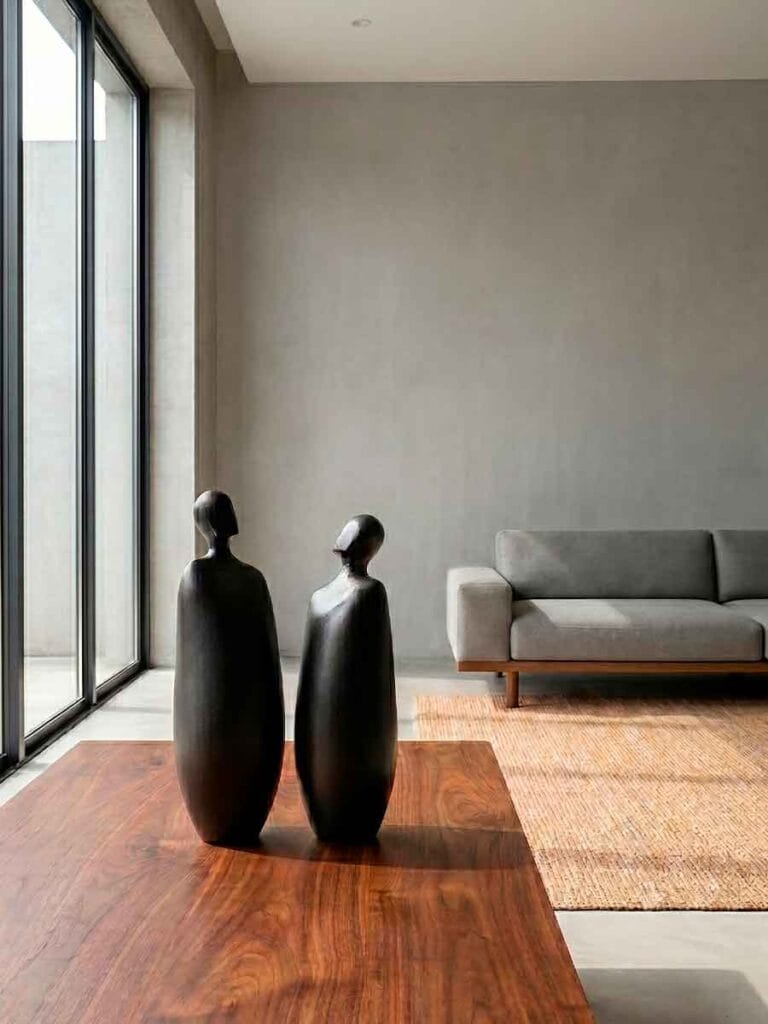
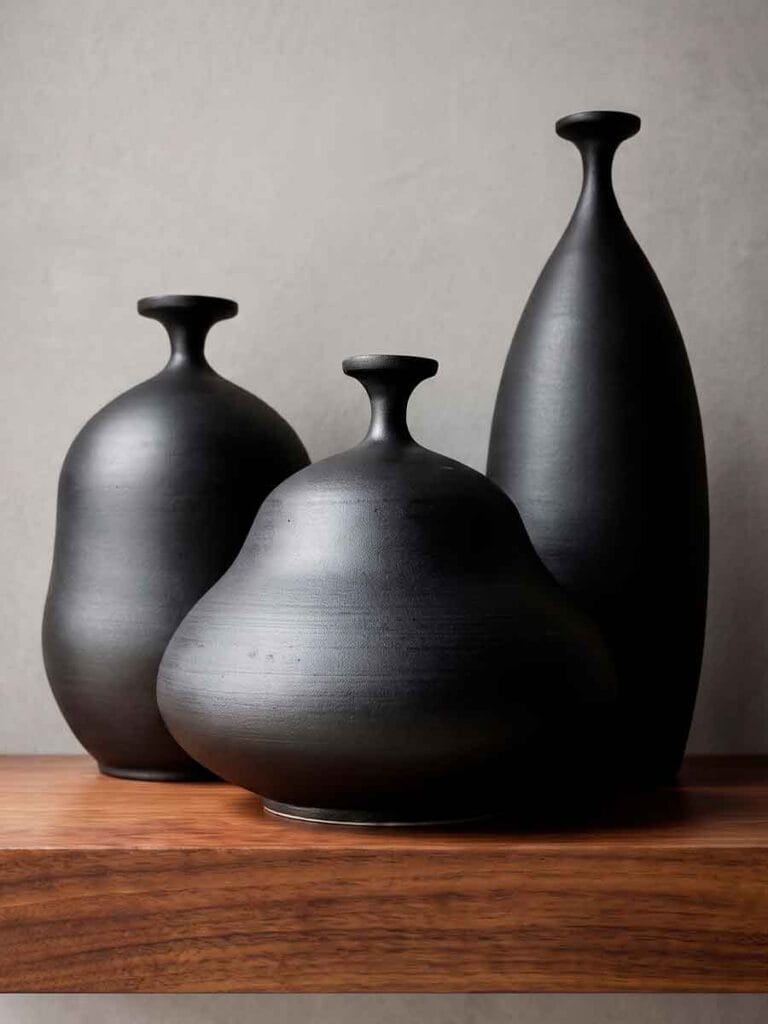
Browse the collections available for specification — Unikas Black, Unikas Quartz, and Moradores. All pieces ship to the United States with a signed certificate of authenticity.
For context on the process behind each piece, see The Studio Pottery Process and One of a Kind Ceramic Art: What It Really Means.
To discuss a project or inquire about available work, contact Fernando directly. All inquiries are answered personally.
Follow the studio: @durao.studio
For further reading on the studio pottery movement and its history, see Studio pottery on Wikipedia.