One of a Kind Ceramic Art: What It Really Means (And Why It Matters)

“One of a kind” is one of the most overused phrases in the decorative arts market. It appears on mass-produced objects sold in editions of thousands. It appears on commercially glazed ceramics made from molds. It appears wherever a marketing team has decided that uniqueness is a selling point, regardless of whether the object is actually unique.
This is what one of a kind ceramic art actually means — technically, materially, and in terms of what it produces. And why the distinction matters when you’re choosing a piece for a space that deserves the real thing.
What “One of a Kind” Actually Means in Ceramic Art
A truly one of a kind ceramic art object is one that cannot be reproduced — not because the artist has chosen not to reproduce it, but because the conditions of its making were unrepeatable.
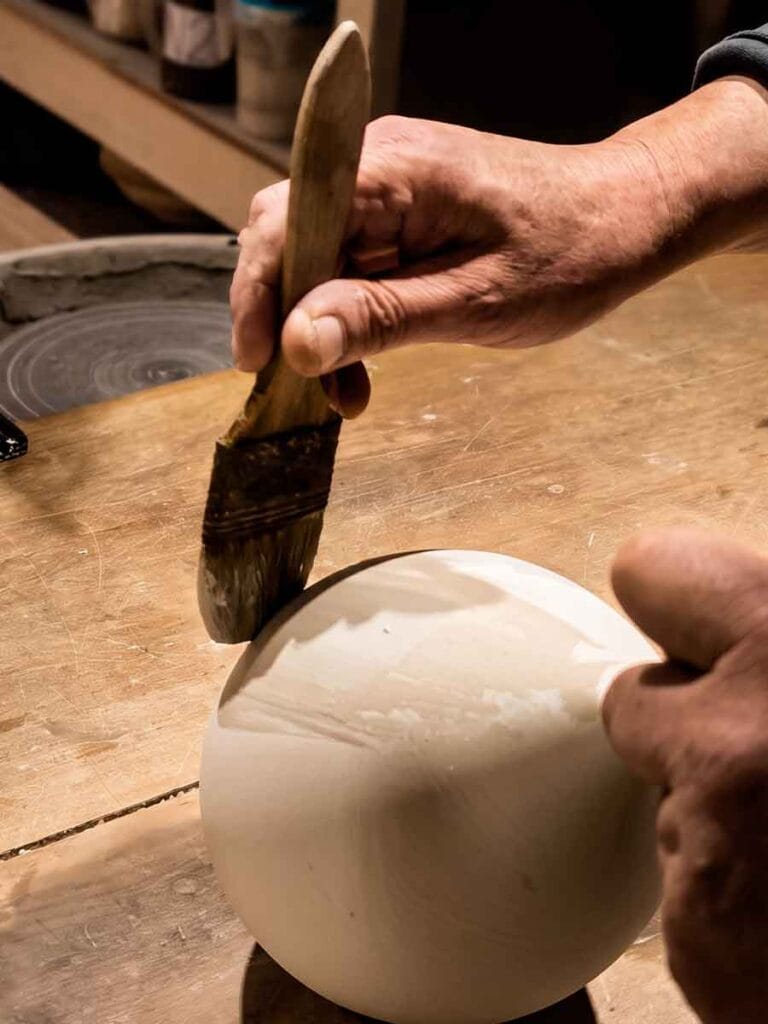
Wheel-thrown pottery is one of a kind in that literal sense. The form is pulled from the clay in real time, by hand, on a spinning wheel. The pressure applied, the speed of the wheel, the moisture content of the clay on that specific day, the temperature of the studio, the attention of the potter at that specific moment — all of these variables enter the piece and accumulate into a form that has never existed before and will never exist again.
A mold-cast piece, by contrast, can be reproduced indefinitely. The mold defines the form, and the form is always the same. A commercial glaze produces the same surface across every piece it is applied to. These objects can be called “handmade” if a human being was involved in their making — but they cannot be called one of a kind in any meaningful sense.
One of a kind ceramic art begins with a process that makes repetition structurally impossible.
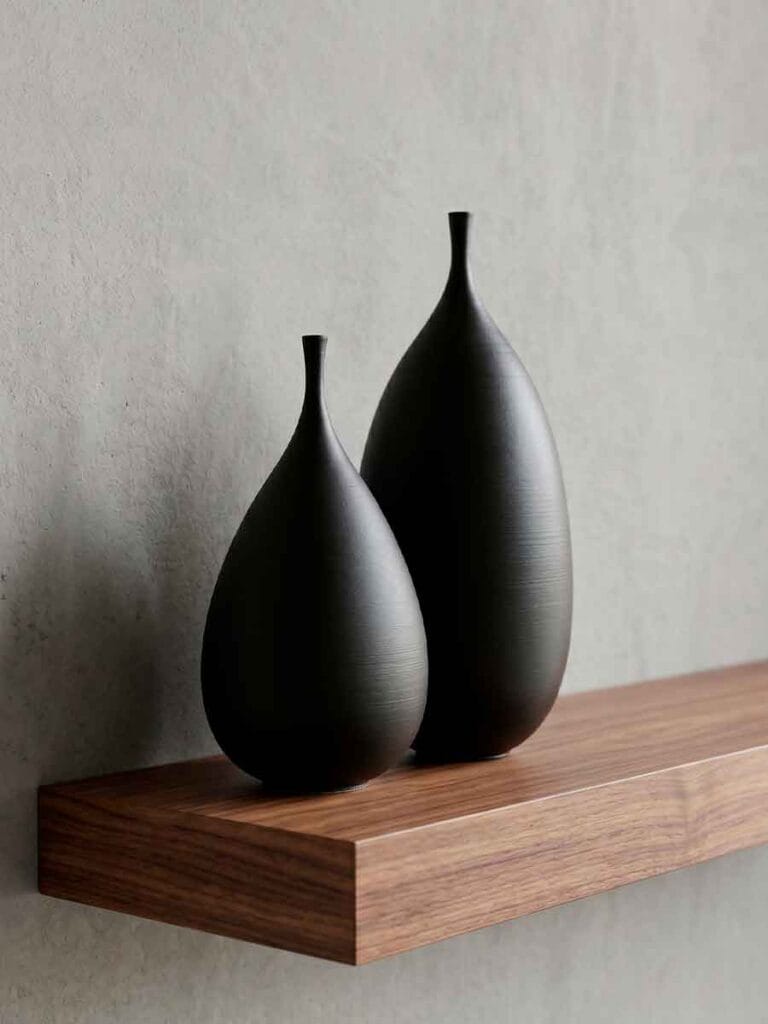
The Difference Between “Limited Edition” and One of a Kind
There is a distinction worth making between limited edition ceramic art and one of a kind ceramic art — because they are not the same thing, and the market often conflates them.
A limited edition ceramic piece is made from a mold or a repeatable process, but produced in a restricted number. Edition of 10, edition of 50, edition of 200. Each piece in the edition is identical or near-identical to the others. The scarcity is artificial — the result of a decision, not of the process. The mold still exists. The edition could be extended.
One of a kind ceramic art cannot be extended. There is no mold. There is no edition. There is a piece that was made once, on a wheel, by a specific person, and that is what it is. If it sells and someone else wants the same piece, the honest answer is: it doesn’t exist anymore. What exists are other pieces, made on other days, that will be different in ways neither the potter nor the buyer can fully predict.
That is the real meaning of one of a kind. Not a policy. A fact.
What a Certificate of Authenticity Actually Certifies
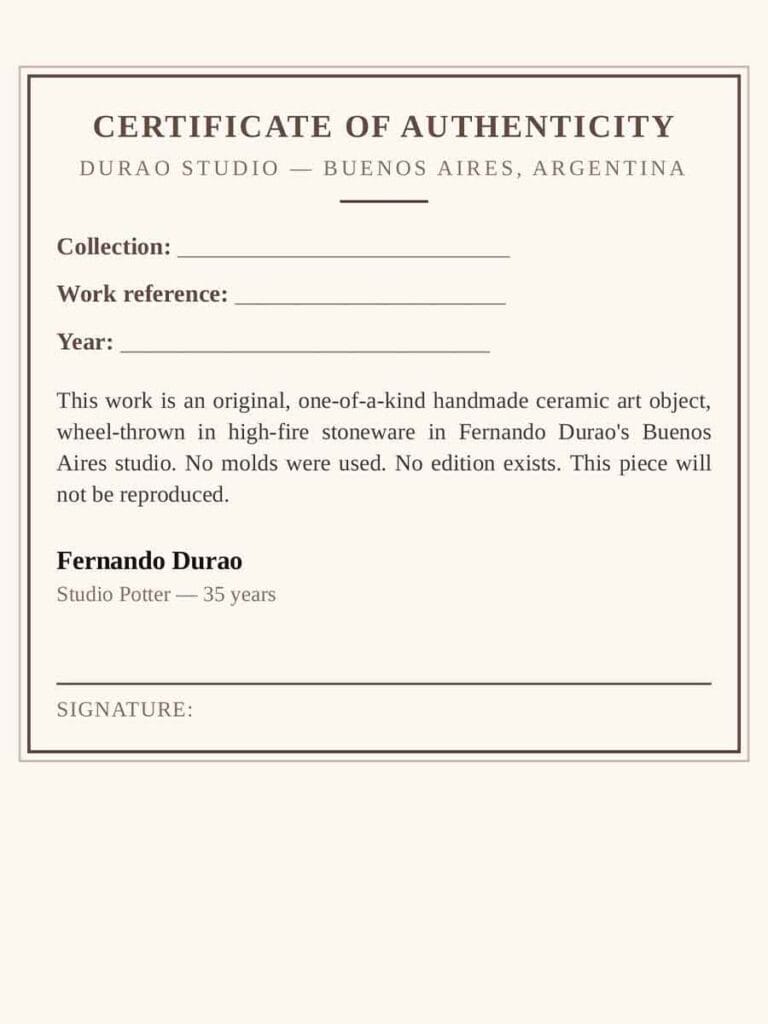
Every piece from Durao Studio ships with a signed certificate of authenticity. It is worth being specific about what that certificate certifies — because the phrase is also overused.
The certificate does not certify that the piece is well made, or that it was made by an artist, or that it has monetary value. It certifies one thing: that this specific object is an original, unrepeatable work — not a reproduction, not part of an edition. It includes the collection name, the piece reference, and Fernando’s signature. It is a document that says: this existed once, in this form, and will not exist again.
For the buyer, the certificate matters in two ways. First, it is a guarantee — a formal confirmation of what you were told when you decided to buy. Second, it is relevant documentation if the piece is ever shipped across an international border, as it supports the classification of the piece as original artwork for customs purposes.
But the certificate is not the proof that the piece is one of a kind. The piece itself is the proof. The certificate just says so in writing.
One of a Kind Ceramic Art at Durao Studio
Every piece at Durao Studio is one of a kind ceramic art in the literal sense. The Unikas Black and Unikas Quartz collections are wheel-thrown vases — each form pulled from the clay individually, each surface finished with a mineral slip formula applied by hand in layers. The Moradores are abstract figurative sculptures, also wheel-thrown, where the form is even less predetermined than in the vase collections — the sculpture emerges from the throwing process without a fixed intention about what it will become.
None of these pieces can be reordered. When a piece sells, what sold was that specific form, that specific surface, made on that specific day. There is no equivalent. There is no substitute. There is only the next piece Fernando makes, which will be different.
That is the studio pottery model. It is also the only model that produces objects that are genuinely, structurally one of a kind.
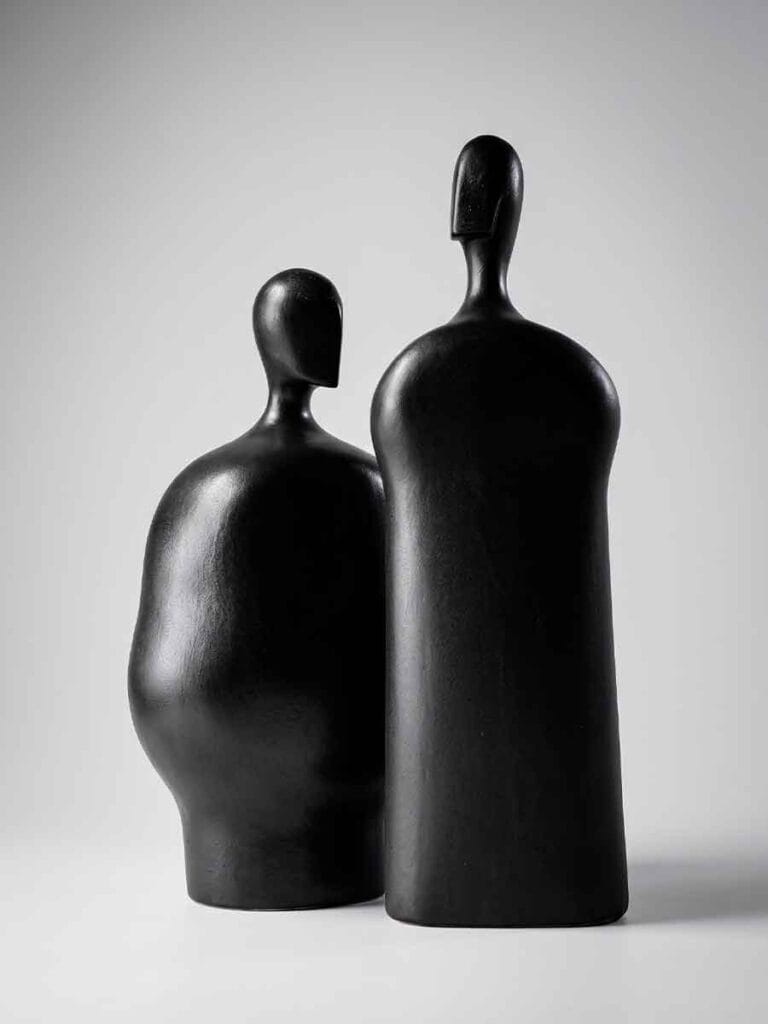
Browse the one of a kind ceramic art available at Durao Studio — Unikas Black, Unikas Quartz, and Moradores. Each piece ships to the United States with a signed certificate of authenticity and door-to-door insurance.
Read more about what makes each piece unrepeatable in Wheel-Thrown Pottery: What It Is and Why It Still Matters and How Ceramic Vases Are Made at Durao Studio.
To inquire about a specific piece, contact Fernando directly.
For context on authenticity in the art market, see Certificate of authenticity on Wikipedia.